Dino (廖銘和) was one of the pioneers of Taiwanese noise, which emerged in the 1990s following the lifting of martial law. Known for his “no-input” approach, he rejected synthesizers, samplers, and other digital tools, instead creating electronic music through feedback with simple analog equipment. An almost mythical figure in Taiwan, he was known not only for his artistry but also for his enigmatic lifestyle and mystical presence. A lover of traditional tea ceremonies, he was also a seal engraver and player of the guqin, a traditional Chinese stringed instrument favored by the literati of ancient China. Dino passed away in Taipei in 2022. Yan Jun reflects on his life and work.
It is often said that Dino was a representative of the Taiwanese second-wave noise movement of the 1990s and that he signified the shift in Taiwan toward the use of purely analog devices. This is not to suggest that, before this turn, Taiwanese noise musicians only used notebook computers. On the contrary, they used their bodies to incite the audience—in other words, the social body.
This was seen in explosive performances by first-wave noise bands such as Z.S.L.O. and LTK Commune, and in events promoted by Wu Chung-Wei. He established the Tian Mi-Mi (Sickly Sweet) art café, the Broken Life Festival, and the Breaking Sky Festival, which spawned an outdoor rave attended by five thousand people. My friends in Taipei have already documented this history well. An overview can easily be found in articles and interviews by Lin Chi-Wei. It is said that Dino was not only a musician but also a witness to an era.

In 1995, the year of the Breaking Sky Festival and the legendary Post Industrial Arts Festival, Dino was nineteen years old—a lover of rock and roll and heavy metal, living a punk-rock life. He had already seen the transformation of underground music into a cultural scene and was about to join a new band, The Clippers, as their bass guitarist. He was also learning about noise.
One of Dino’s early forays into noise is captured in a 1996 video titled Old Su, I Love You to Death featuring The Clippers. The performance, recorded in a small, dark room somewhere in Taipei, is archived by the ET@T digital art collective. Compared to earlier experiments in social body disorder, the chaos of this performance was more modest in scale and included prank phone calls. Mostly, it involved electronic equipment generating noisy, clashing signals, akin to linguistic chaos.
The musical language of The Clippers later became increasingly standardized—like that of a regular band—as the group rose in popularity, and that moment in the small room now seems like a gap between two temporal mechanisms. Yet, while this gap suggests the dynamism of cultural and countercultural ideologies may have disappeared, there still exists a desire to find a vehicle for confrontation in this still-not-entirely-seamless world.
Dino’s entry into noise, however, was not borne of chaos but rather from clarity—like the “pure sounds that give us joy,” as Japanese noise pioneer Toshiji Mikawa once said. Of course, Mikawa—especially with his band Hijōkaidan—has generated his share of chaos, which, in his words, “was a nihilistic, total loss of control responding to the rapid expansion of capitalism.”
But the joy arising from sound can’t be described with words and exists independently of ideologies responding to any stage of capitalism—including Jean Baudrillard's “implosion,” Antonio Negri's “empire,” and Mark Fisher’s “capitalist realism.” It even rises above the ideology of the noise scene itself, because, after all, this joy is a feeling, and feelings are experiences that transcend words.
When Hsiao Ying of The Clippers described noise as a loss of control, I understood it as a loss of control over meaning. Although not magnificent, noise still has an objective. But when joy arises from noise, the connection is severed from whatever that objective is.
In 1996, Dino bought his first mixing board and immediately plugged a wire into the board’s headphone jack. This sent output to the first track, creating a brief but shocking noise before its circuit burned out. In terms of sound, no-input feedback noise is an endlessly replicating signal arising solely from within a device. Compared with the feedback that comes from pointing a microphone at a speaker, no-input feedback is much more concentrated and powerful. Although Dino obtained it by accident, the sound was stable and clear.
When one connects with this kind of noise, there isn’t time to think, and for this reason, people in the noise music scene rarely talk about social or ideological revolutions. It’s not that these things never happen but rather that they only happen in particular ways. Based on this, noise has become a practice divorced from symbols and independent of a conceptual discourse. Because noise demands no duality—meaning it doesn’t oppose any external force—it can only exist in reference to itself.
Of course, visual art might have undergone a “linguistic turn,” as it is often called, but sound never experienced a shift from meaning to language. In fact, no language is involved, let alone a sociological or anthropological turn. Perhaps art history has not been willing to let this happen. But then, what can we do? We have no choice but to return to a perception that has been forsaken by the mainstream framework—again and again.

Confirmation of Dino’s early work exists in several cassette tapes he released in 1997. Later, he claimed he had never released any recorded works and that he had only ever been a live performer. However, three such works can still be heard on DJ Rex Chen Yi Chung’s YouTube channel: “Experimental Sound,” “Song of Death,” and “Recycle MusiK Project.”
These are indeed considered works that Dino recorded—as opposed to live performances—because they possess a certain deliberateness and stability and, in my opinion, are truly sweet, clear, and perfect. Two of the pieces feature mostly microphone or mixing board no-input feedback. The other work is mostly composed of multiple overdubs and mixing for cassette tape, with the addition of microphone feedback and keyboard. All three works make use of delay effects. Except for overdubbing, Dino used all of these techniques throughout his twenty-five years of practice.
Feedback is a source of noise, and obviously, there’s nothing philosophical about it. Above all, the sound of feedback is concentrated and rich in texture. Second, it’s continuous and, if not stopped, will go on forever—nullifying the concept of time. Third, feedback is imprecise, like the most rudimentary level of language. It’s non-language and directly perceived. Feedback suits an amateur bass player like Dino or someone approaching it without any preconceived notions.
Other than using sound textures, how did Dino compose in 1997? One approach was by making no distinction between loud sounds and soft sounds, or between primary sounds and noise. His principal strategy at that time was to input exceedingly loud sounds onto magnetic tape to create overloading. This process resulted in a distortion where the bass tones were warm and loose, and the peaks were smoothed out.
To borrow Dino’s own words, this sound might be described as “universal love.” But the quieter sounds were also amplified, and the background noise was boosted, further expanding this sensation. Later, to achieve a similar effect, he used an audio compressor to merge the outer, perceptible boundaries of sounds with background sounds, which arose as if out of nowhere, emerging into clarity from the imperceptible.
A second approach involved using continuity. I suspect his first mixing board lacked a mute button. By contrast, Japanese no-input feedback musician Toshimaru Nakamura relies heavily on the mute button, as it is crucial for quick switching. Of course, it’s possible Dino had a mute button but simply chose not to use it, as he preferred continuous time.
Generally speaking, this kind of continuity is common in Southeast Asian noise circles and is also present in anti- and pre-modern cultures of Europe, the Americas, and Japan. By comparison, free improvisational music tends to be radically modern, pushing discontinuity to the extreme.
Dino’s third approach was to create a feeling of flow. His use of a delay pedal was unique. He didn’t simply duplicate and amplify sound but rather produced fluctuations that generate an illusion interfering with the linearity of time. He then introduced flanging and later added pitch shifting, vibrato, and Bassballs filter effects—all of which contributed to pitch bending and sliding.
An example of this can be found in his track “When Will the Fleeting Spring Sway the Chalet of Dream? The Moon Conveys an Emerald Through the Lake in Reverie,” which was part of a CD compilation released with the catalogue for the 2005 exhibition The Lake at Taipei Artist Village. The same flowing effect appears in Iannis Xenakis’s “Metastaseis,” where forty-six musicians simultaneously perform the glissando technique on strings to transcend the static state of modernism.
Dino’s fourth technique was to manipulate the equalizer knobs on his mixing board to create variations in flow. He sometimes adjusted the amplitude of the sound, sometimes jumped to another sound altogether—but always repeated these jumps—and, occasionally, those sounds or background noises would spontaneously rise to become the main thread. The way I’d describe these shifts is with the Chinese concept of transformation (化), where all things are destined to change and grow while maintaining an intrinsic continuity throughout the process.
In his early period, Dino also experimented with multitrack layering but later abandoned the technique, finding the process too troublesome. I guess this kind of construction and spontaneous growth are essentially two different worlds.
Many of the techniques described above can be heard on the B-side of Senko Issha Live (2018), a cassette featuring two of Dino’s live performances from that year, released by Senko Issha Records. I’ve decided not to elaborate on Dino’s early performances with The Clippers, his early industrial beats, unreleased tracks from 1998 as a member of the band Buddha’s Head, soundtracks, and other projects in this text.
The first time I saw Dino perform live was on the Mini Midi Stage at Beijing’s 2006 Midi Music Festival. At the time, he was already known in experimental music circles as “that guy who only uses feedback.” His setup then included two portable cassette players. He began his performance by feeding a simple feedback loop into either the left or right channel, then reproducing it through the mixing board’s aux output and input with a delay, and finally feeding the feedback into the other channel. This created a sequential effect and an illusion.
Dino used one of the cassette players as a microphone to directly feed back ambient sound waves. He used the other as a signal splitter to divide the signal into left and right channels, which were then biased toward high and low frequencies. The result was a high-low blend creating an auditory illusion, as listeners were unable to differentiate between the right and left channels and could only experience the sound on a purely sensory level. For this reason, only the nervous system and its biochemical processes can truly attest to Dino’s philosophy of sound, which goes beyond language—something that’s demonstrated through its practice.

Sometimes, Dino would ask event organizers merely to provide him with a bottle of kaoliang liquor and a mixing board, and he would bring a few cables to the performance. On YouTube, there’s a video of Dino performing at a launch event for Lin Chi-Wei’s 2012 book, Beyond Sound Art, at the Digital Art Center in Taipei.
In the performance, Dino touches the end of an audio cable with his hand, connecting his body to a circuit to produce a low-frequency sound. He then uses this as the primary sound source for a feedback loop. I call this method “open input source feedback,” which is unique to Taiwan and based on a fundamental 60Hz frequency. In Dino’s hands, it was continuous, fluid, growing, and representative of equality.
Over the years, Dino added new equipment and retired old gear from his performance setup—especially in his final few years, when he was using up to eight or nine effects pedals. The sounds at these performances became more varied, but his basic principles remained more or less unchanged. The spaces he performed in included live houses, rock ’n’ roll bars, art centers, and urban underground passageways. From a sociological perspective, this was an evolution in venues, even if the walls, windows, and floors stayed largely the same.
The sound coming out of the speakers in these performances had blurred edges—sounds at different volumes were blended into a chaotic whole and often had extreme frequencies. In each space, the sound was reflected and diffracted into reverb in a distinctive way. Dino’s live music was more dependent on the dimensions of the venue than that of other musicians.
High frequencies, for example, would be heard differently based on the location of an audience member within the space, and the paths of reflection were almost tangible. It was as if these paths formed temporary shapes and those attending could touch the spirit of the venue. Lin Chi-Wei calls this phenomenon a “summoning ritual,” an effect that can be heard in recordings of Dino’s music released by Karma Detonation Tapes. In a sense, these tapes have preserved the presence of that which is absent.
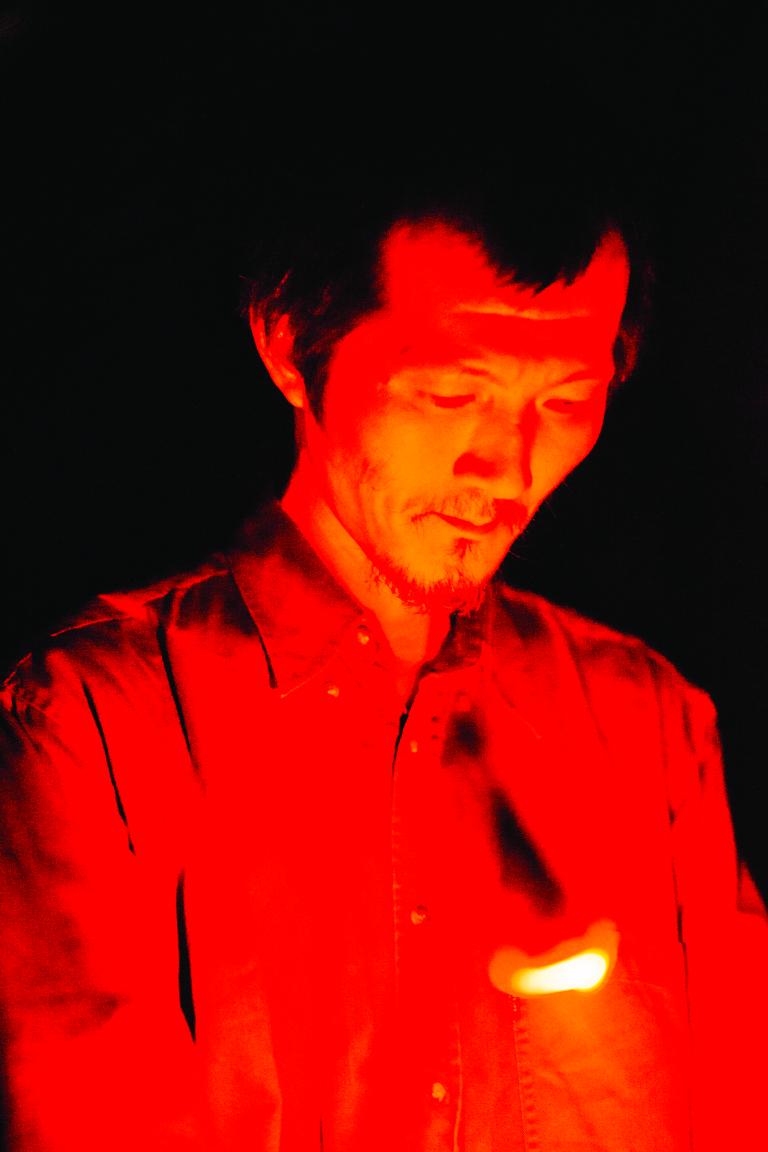
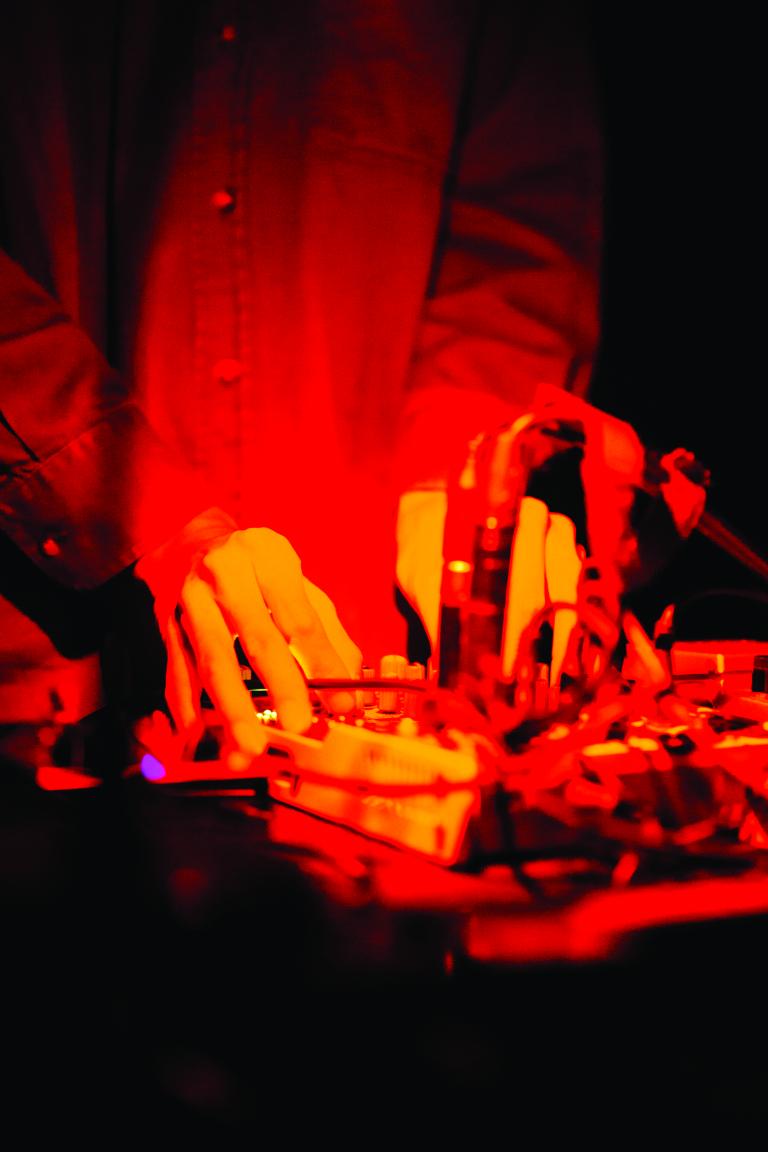
The trajectory of Dino’s life seemed fairly simple and could be characterized as quiet and steady amid the motion of others around him. Watching him perform at the mixing board was like watching someone pluck a guqin. He would sit bolt upright, his elbows at his sides and hands hovering above the board as he pressed and stroked it. His body remained stock-still as his hands did all of the work.
Dino remained still while the countercultural utopia faded, as commercial music festivals rose and noise was rebranded as “sound art.” His friends received grants to organize sound performances, stage theater productions, shoot documentaries, and curate exhibitions—all of which somehow included him. His inclusion turned him into a mirror, reflecting other art forms with his music. The light came from the forward momentum of culture, but the mirror neither judged nor engaged in the dialectic of subject and object.
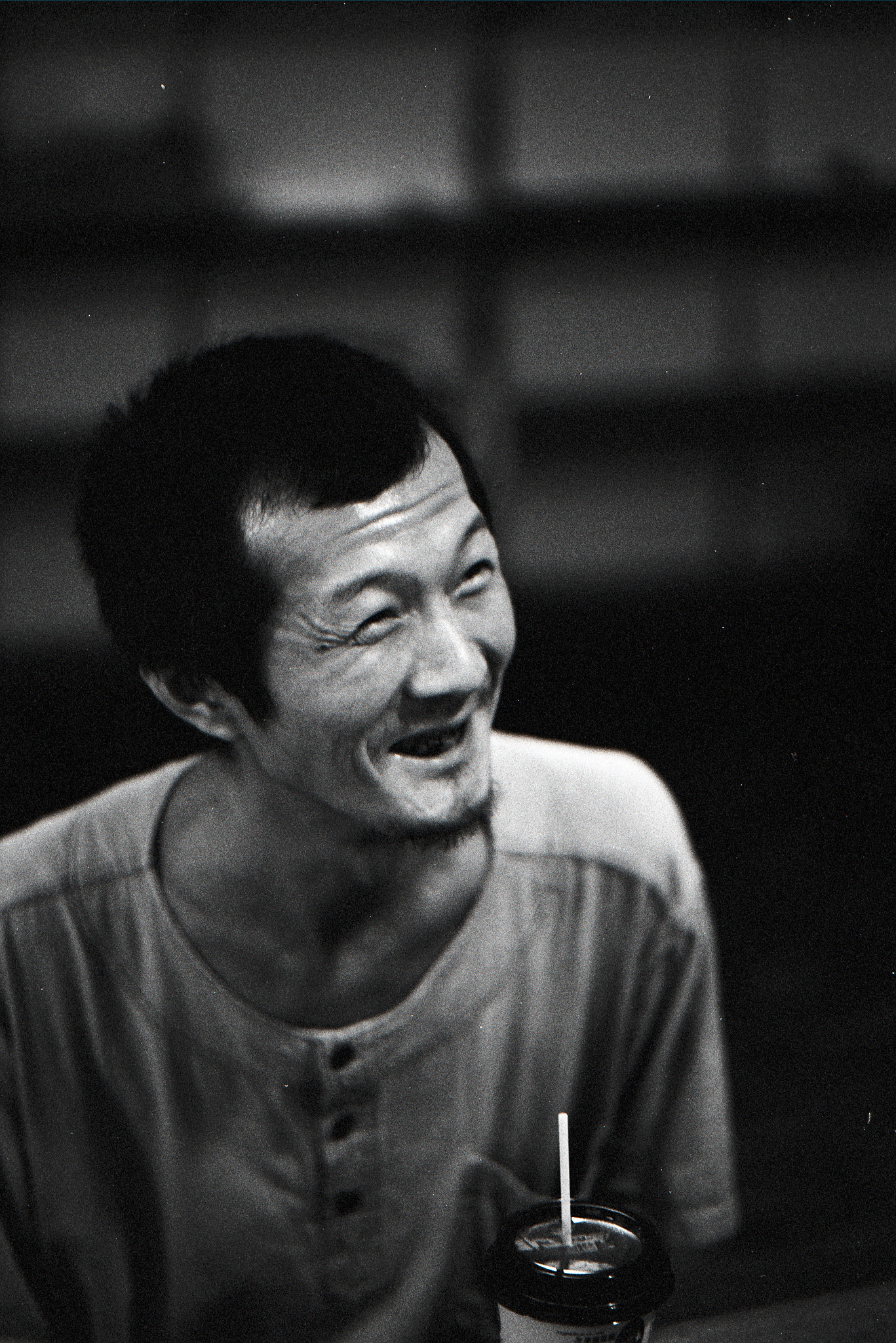
In the new millennium, the tide of Taiwan’s vibrant social movements of the ’80s and ’90s ebbed to its lowest point as Dino moved to Taichung and then back to Taipei. He lived on Yangming Mountain, drank pu’er tea, played with teapots, and practiced seal carving and calligraphy. One might say he was obsessed with play.
Once, when he had some money, he purchased a guqin. It sat unused for eight years until 2011, when he started playing it. Whenever he had no money, he held advertising signs on the street. Later, he helped a friend who had a guqin business by carving and varnishing the instrument, which became a kind of job for him. He had a cold when I visited him in 2011. While chatting about teapots, he dried his used tissues, saying, “Hey, these can still be used.”
In 2013, Dino moved down from the mountain to a small residence with a courtyard in Taipei City, where friends often came to hang out. This marked another stage in his life. I once stayed there for a few days. Every day we woke up, drank alcohol and tea, smoked, played the guqin, and chatted with friends. By evening, I was so hungry I was seeing stars, and he’d still be talking about mystical topics, like not believing in improvisation anymore.
At that time, frequent visitors included friends from Kandala Records (旃陀羅)—that name carrying a non-modern, even political meaning. This occurred after the rise of “sound art.” Later, Dino taught others how to play around with no-input feedback and a mixing board at the Senko Issha record store. In this way, he got to know a group of new-generation noise musicians.
Some people say Dino’s parties were legendary—everyone knew he was always at home and always welcoming. In other words, he always existed—even if the entire world around him constantly needed to confirm whether they themselves still existed. He possessed a kind of steadiness as time passed and shared it with everyone.
Dino’s body was enhanced by cigarettes, alcohol, tea, and drugs, just as some people are shaped by the white-collar life or social media—as all bodies are adaptable devices. I don’t think of the body as a vessel, but rather as some kind of device that is in the process of transformation. Indeed, Dino lived through several eras in Taiwan, the most remarkable of which was the era of countercultural student movements in the ’90s. Then, after ET@T’s early explorations of digital culture in the last years of that decade, there was an eruption of grants and new terminology, which was also remarkable.
Those times changed everybody’s postures, their voices and paces, even their expressions—not to mention the organic food they consumed and the biopolitics that governed their lives. But there was something else: a different way Dino kept his body free from the imprint of symbols. This allowed him to continue brewing tea, pouring drinks, lighting cigarettes, and playing the guqin—without letting his world devolve into chaos. He set up those things that supported his existence in his living room and, along with his demeanor, entertained the bodies of those friends who also faced the same changes in society and terminology.
There was one time when a neighbor’s dog chased me, barking all the way to Dino’s home. A little later, that same dog sauntered into his courtyard, flopped down, and fell asleep. To paraphrase the philosopher Zhuangzi: When one truly perceives and is free from the mind’s grasp, even spirits—let alone a dog—feel at ease in their presence.

I’m reminded sometimes that even Dino, though thoroughly self-possessed, was not impervious to external threats, as he still got sick—just as those who take supplements and are anxious about being productive do. Nonetheless, however fragile his body was, his demeanor remained steady, and this he shared with everyone.
Dino once mentioned in an interview the Confucian classic The Great Learning, quoting its teachings as manifesting illustrious virtue—bringing people together and allowing one to rest in the highest excellence. Enough practice had allowed Dino to disengage his mind and achieve a free, natural state he called his “highest excellence,” enabling him to perform effortlessly. Of course, he also drank alcohol to calm his nerves, much as he took chemicals to summon his spiritual potential. More fluidity was necessary for Dino’s “device” to attain its “highest excellence”—I think.
Sometimes I think there are two different societies. When I spoke to Dino about young people passionate about the arts and culture, he referred to them as “intellectuals like us.” This really surprised me, but it turned out to be true. I learned that in Taiwan, some intellectuals took drugs, some protested on the streets, and others went to raves.

In Taiwan, I heard Lin Chi-Wei discuss LTK Commune’s manifesto Shoot the Pianist, which they self-published in their 1992 zine Agony News. Lin compared it favorably to “The Record of Music” (the nineteenth chapter of the Confucian classic The Book of Rites). Being accustomed to reading texts written in simplified Chinese, I was shocked.
In ancient times, I learned, intellectuals were referred to as ru (儒). This term predated the mainstream Confucian notion of the intellectual—as exemplified by Confucius (孔子), Mencius (孟子), Cheng Yi (程頤), and Zhu Xi (朱熹)—but also denoted something much broader, including the role of shamans. Over time, this identity evolved into a way of life—no longer tied to shamanism—based on an ideal of ethical living and reflected in daily practices.
Why had I never thought about “manifesting illustrious virtue”? I had always thought of intellectuals as professionals, usually working in some official capacity. As for “highest excellence,” I was acquainted with Taoist priests and practitioners of Buddhism, but few people in my circle discussed ethics. Of course, now I know that ru circulates and is omnipresent in Taiwan, and that young people enthusiastic about the arts should be counted among the intellectuals. Well, Dino indeed perfected his ethics.
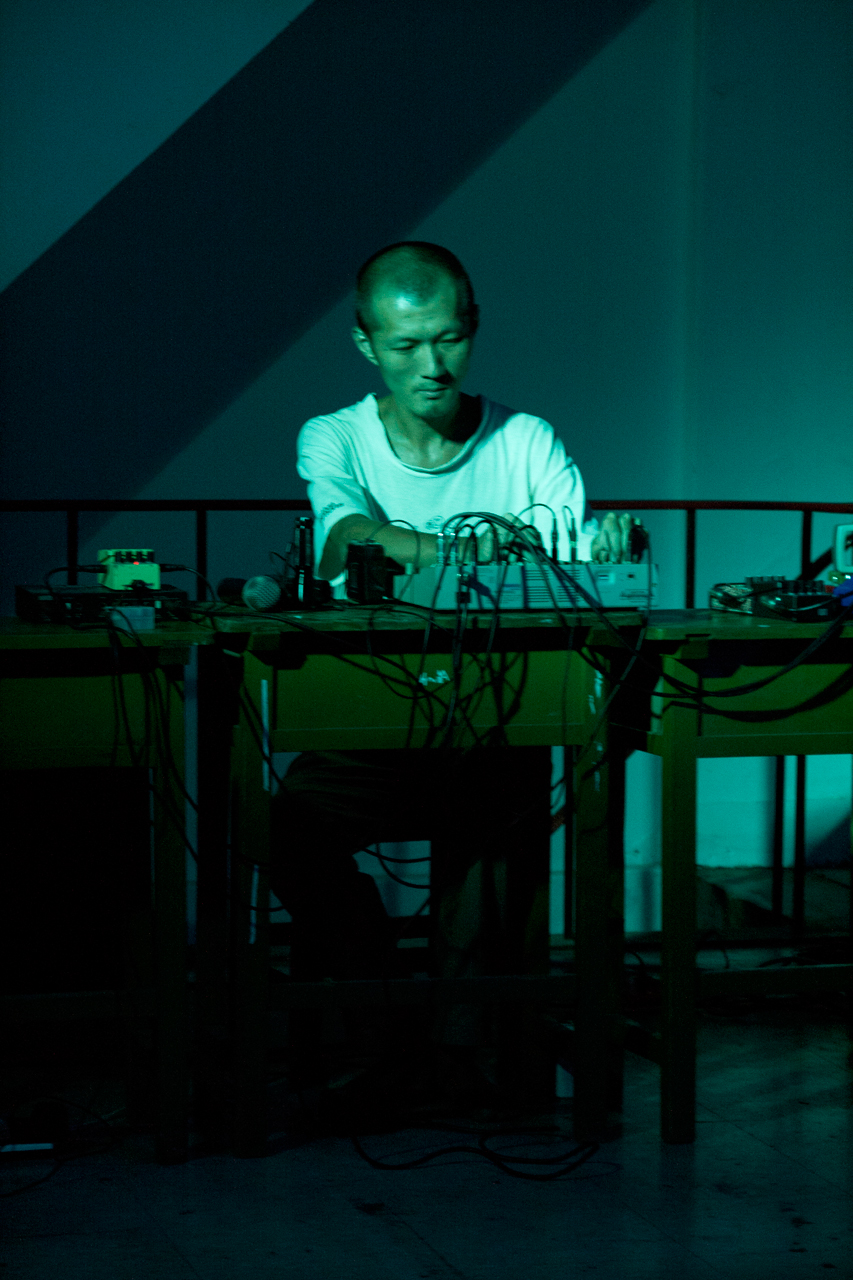
Dino often described himself as a fundamentalist, in the same way that someone might call themselves a “punk rocker” to identify with a particular set of values. He said that improvisation was impossible—or at least that it was for him. He thought his countless hours of playing or practicing were about taming feedback. It was the work of someone who paid attention to the underlying principles of a certain configuration of devices, the limited variations of a single sound, or even the absence of variation over a long period of time.
What came out of these limitations was the revelation of the inherent order within the materials he worked with, and from this, he was able to summon the particular sound he desired. This might have been the magnetism and stickiness within a neutral sound or noise—the word “noise” no longer being pejorative, nor carrying countercultural or dialectical implications—which were brought into being by turning knobs.
As for “manifesting illustrious virtue,” why not instead manifest a sound? “Manifest” here means to make something perceptible, not simply to make it understood. Or, you could say that making something understood is the concrete action of bringing something obscure into light, where knowledge and being are inseparable. The sound is initially latent—yet to be made coherent—so the performer must bring it into light.
This underlying coherence, in Dino's words, suggests that improvisation should follow the principles laid out by the ancients or, to use even older terms, should adhere to “rites” (禮). I imagine that when he said this, it was one of the rare moments when he wasn’t smiling. The inexpressible things are unchanging; the mixing board and the body are devices that also do not change—they simply respond to different situations. In this sense, maybe improvisation doesn’t really exist after all.

Working largely within unchanging parameters, Dino improvised across three different decades, mostly in solo performances. In his final years, however, he collaborated with others, usually in duos. In 2018, for example, he made a live recording with Yong Yandsen under the name Kaoliang Brothers at RAW Art Space in Kuala Lumpur. An eponymous, limited-edition cassette of the recording was released by Senko Issha Records the following year.
While orthodox European-style improvisation—if there is such a thing—previously emphasised confrontation, it has now shifted to dialogue emphasising discontinuous sounds and transitions. Dino’s collaborative performances, by contrast, remained continuous and refrained from dialogue. He performed with other musicians in a state of coexistence and mutual acceptance, where each was at ease in their own place.
I don't know if this kind of live performance was fundamentalist enough for Dino or if it had become the same every time. Supposing the mixing board is an interface where principles can be manifested, then, by practising on this interface, the body becomes an extension of it, and the self is modified. If the performance flows through and shapes the player, then isn’t this process improvisation?

This conversation had to come to an end, and perhaps there was no need to go any further. Once a person has existed, they never really disappear but continue beyond any exchange of words. Dino mentioned cultivation and rites a few times and then said no more. It’s not that he didn’t speak, but rather that he spoke through practice. The rites of ancient China have become ceremonies in our modern times. No one can complete a rite just by talking, nor does it become something else simply by giving it a different name—it’s something that only exists through doing. Oh, forgive me for saying too much.
Improvisational performance is ultimately about the desire to live because it is about making choices and being present. In the end, in the performance that was his life, Dino chose to stop treatment. He rested at a place where he no longer needed to exert effort.
October 13, 2024

wish to extend my gratitude to Hsu Ya-Chu and Lin Chi-Wei for their help. This text references audio, video, and written materials from the work of Lin Chi-Wei, Yu Wei, Jeph Lo, Dawang Yingfan Huang, Muching Wu, Singing Chen, Ficus S, Ye Weili, the In-Site Experimental team, DJ Rex Chen Yi Chung, Senko Issha Records, Karma Detonation Tapes, Kyle Kaplan, and others. My apologies for not listing everyone here; my gratitude extends equally to them. Most of all, thank you to Dino.


