It was during a séance on January 1, 1906, that Hilma af Klint (1862–1944) received the commission for Paintings for the Temple. In a notebook entry, she recalled the pivotal moment: “Amaliel offered me a work and I answered immediately, ‘Yes.’” This was no ordinary commission. Amaliel was one of several higher spirit beings af Klint communicated with during weekly meetings of De Fem (The Five), a women’s Spiritualist collective in Stockholm. She was now entrusted with a monumental task: to make visible the unseen spiritual realm. Af Klint envisioned these “astral paintings” adorning the walls of a future spiral temple.
The result was an astounding series of abstract paintings. Her first cycle, Primordial Chaos (1906–07), was created years before the conventionally understood beginnings of abstract art, which are typically traced to the 1910s and artists such as Wassily Kandinsky, Piet Mondrian, and Kazimir Malevich. Yet after repeated, frustrated attempts to exhibit her work, af Klint ultimately instructed that it remain unseen until twenty years after her death. For decades, the paintings lay hidden in the attic of her heir, Erik af Klint. Only in the twenty-first century did they gain wide recognition. Their full reverberations are only now being felt.
Af Klint’s oeuvre, as her biographer Julia Voss describes, crashed into the canon of abstract art like a meteor, throwing into chaos long-held notions of authorship, origins, and artistic genius. Central to this disruption was the role of occult movements such as Spiritualism and Theosophy in shaping her visionary work. She was not alone: Many prominent artists of her era—including Kandinsky and Mondrian—engaged in occult practices as they rebelled against scientific materialism and sought to portray unseen forces. In the following piece, Marina Smith and Ron Hanson explore the occult’s influence on modern art—its suppression, and its re-emergence as a locus of contemporary interest.

Hilma af Klint’s first major solo exhibition in the United States, Hilma af Klint: Paintings for the Future, took place at New York’s Guggenheim Museum between October 2018 and April 2019, attracting a record 600,000 visitors—the largest audience in the museum’s history. Suddenly, the once-obscure Swedish artist became an international sensation, drawing crowds of adoring fans to prestigious museums while receiving belated recognition from art historians. In recent years, large-scale exhibitions of her work have been held at venues including the Tate Modern, Moderna Museet, Guggenheim Bilbao, Tokyo’s National Art Center, and MoMA in New York.
Af Klint’s paintings are visually stunning, many of them monumental in scale. Her most ambitious series, The Ten Largest, comprises canvases measuring 10.5 feet tall by 8 feet wide—replete with symbols, animal and floral forms, helixes, lines, shapes, and color combinations that transfix the viewer. Virtually unknown in her own era, the artist’s work resonates powerfully with today’s zeitgeist. “Hilma af Klint,” art critic Laura Cumming wrote in the Guardian in 2023, “is an artist for our times: lesbian, feminist, anti-establishment, a restless radical involved in women’s cooperatives, fiercely industrious, supremely self-reliant.”
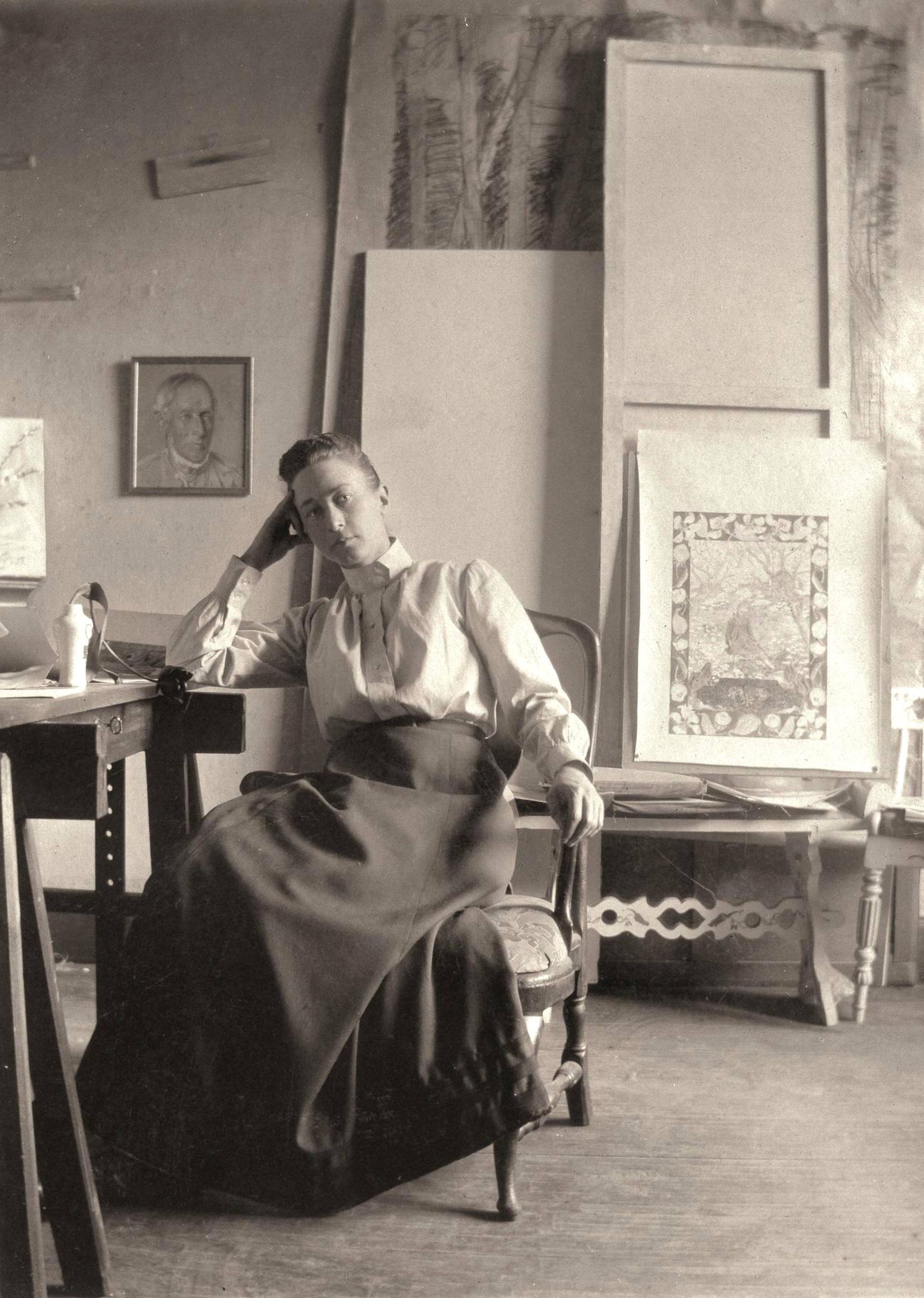
And yet this doesn’t fully account for the fascination with af Klint. Arguably, what makes her work so penetrating in this cultural moment is its deep engagement with the occult. Working in her Stockholm studio, af Klint immersed herself in the ideas and practices of Spiritualism, Theosophy, and Anthroposophy—three major occult movements of the nineteenth and early twentieth centuries. This involvement profoundly shaped her creative process, influencing both the form and content of her paintings—and ultimately determining their fate.
Af Klint’s spiritual explorations are strikingly relevant today, as we, like her before us, navigate a turbulent world of political upheaval and existential uncertainty—perhaps even a major civilizational shift. In such moments—when “all that is solid melts into air,” to borrow a phrase from Karl Marx’s Communist Manifesto (1848)—and when the rational mind fails to make sense of the world, interest in the occult resurfaces most vigorously.
Guided by Angels
But what exactly is “the occult”—a term so deceptively familiar, yet notoriously difficult to define? Derived from the Latin occultus (hidden or secret), itself from celare (to hide), the word first appeared in French (occulté) in 1120, in the Psautier d’Oxford, a manuscript of Psalms. In the medieval period, the term referred to hidden forces or qualities—imperceptible to the human eye—believed to reside within divine mysteries or natural phenomena.
The modern sense of “occult”—“of or relating to magic, alchemy, astrology, theosophy, or other practical arts held to involve agencies of a secret or mysterious nature” (Oxford English Dictionary)—gradually emerged from the sixteenth century onward, driven by Renaissance interest in esoteric traditions such as Hermeticism and the Kabbalah.
In Occult: Decoding the Visual Culture of Mysticism, Magic & Divination (Thames & Hudson, 2024), Peter Forshaw defines the occult as “mankind’s fascination with wonders and marvels, initiations into secrets, and the seeking-out of hidden things.”
During the Renaissance, the rediscovery of ancient arcane knowledge marked a pivotal turning point. The fall of Constantinople in 1453 hastened the influx of Greek manuscripts into Europe. Scholars fleeing the collapsing Byzantine Empire carried these texts, adding to the medieval Latin writings that figures like the Italian poet Petrarch (1304–1374) had unearthed in monastic libraries. Among the Greek texts were writings on astrological medicine and invocations of angels and demons, along with amulets, charms, spells, and prognostications. These often featured magical scripts, Kabbalistic symbols, zodiac signs, and apocryphal Solomonic seals. [1]
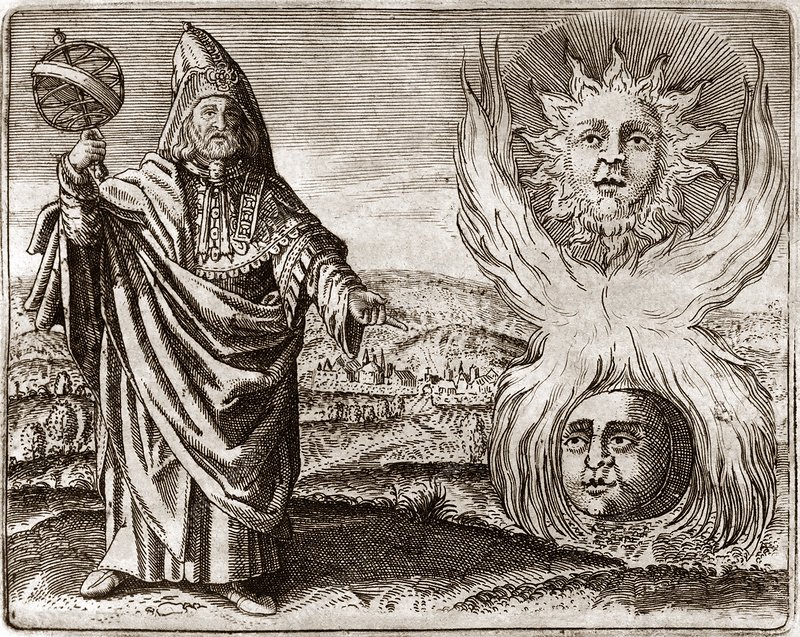
With the invention of the printing press around 1450, these texts spread more widely and rapidly than ever before. As they circulated, alchemists and philosophers drew on writings attributed to the mythical Egyptian sage Hermes Trismegistus, including The Emerald Tablet, a foundational alchemical text from the Arabic tradition (ca. 6th–8th centuries), translated into Latin in the twelfth century by Hugo of Santalla. Renaissance scholars synthesized these works with Neoplatonic and Kabbalistic teachings to produce occult treatises, grimoires (textbooks of magic), and illuminated alchemical manuscripts.
These works blended Christian symbols with classical alchemical imagery, featuring graphic symbols for substances and processes, alchemical apparatus, and depictions of animals, birds, plants, human figures, and celestial bodies. They encoded secret formulas, including the Magnum Opus—the process of creating the philosopher’s stone, a mystical substance believed to transmute base metals into silver or gold and yield the Elixir of Life.
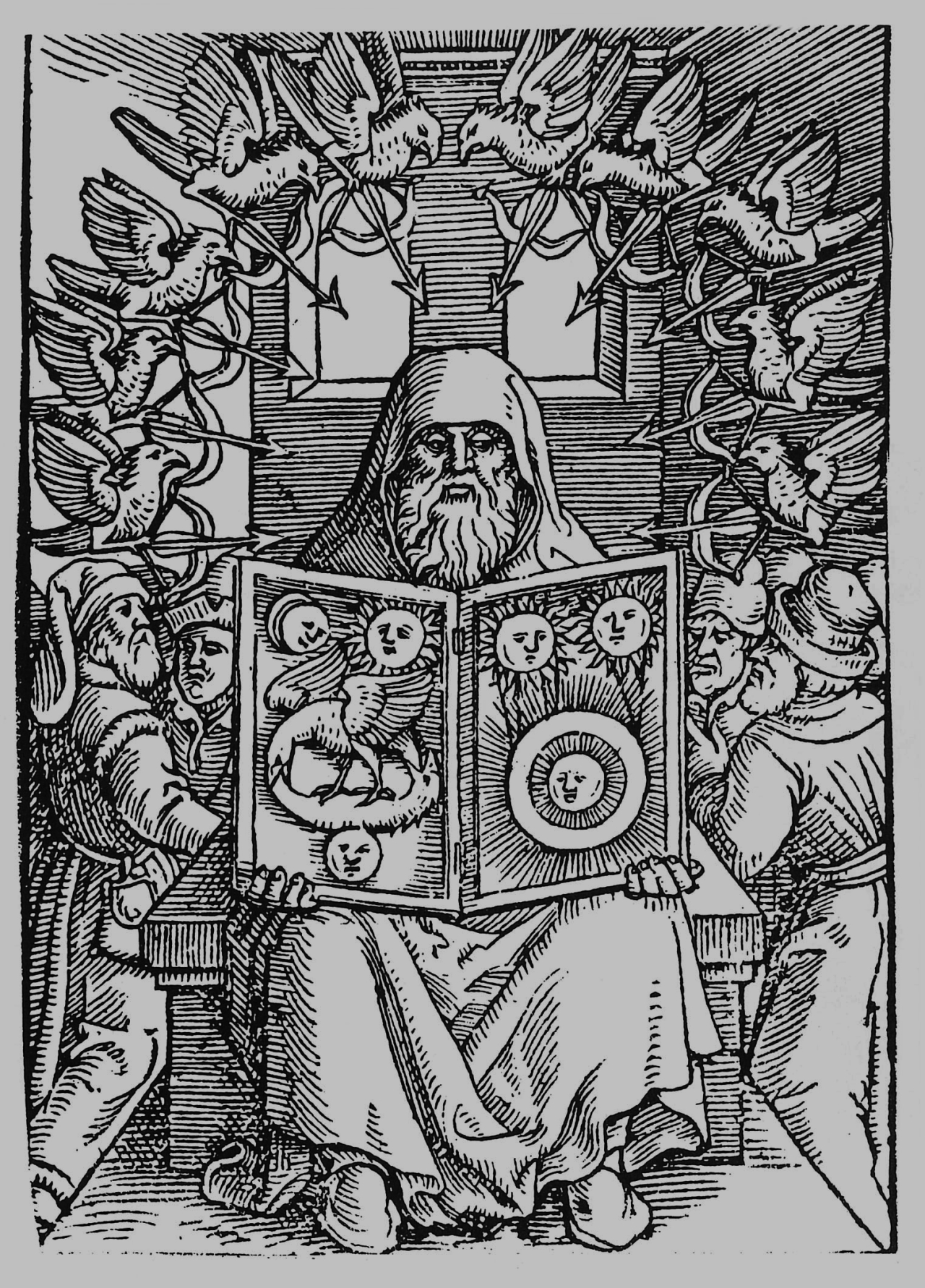
The scholarly study of astrology, numerology, alchemy, and natural magic was central to the intellectual climate of the Renaissance and helped shape the Scientific Revolution. The ancient mystical practice of alchemy, for example, served as a forerunner to early chemistry, introducing experimental laboratory techniques and providing a philosophical foundation. Astrology, with its worldview of the interconnectedness between the human body and the cosmos, helped lay the foundation for early modern medicine.
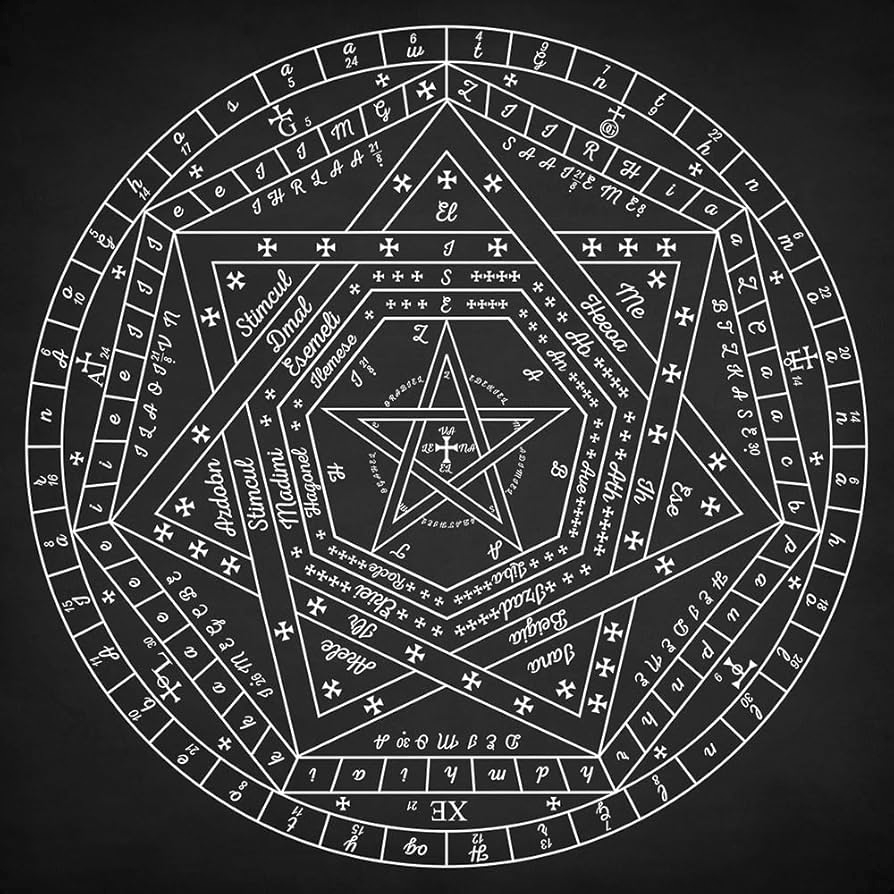
In the late sixteenth century, John Dee (1527–1608) recreated the Sigillum Dei, or Seal of God’s Truth—a wax disc inscribed with a complex magical diagram composed of circles, heptagons, a pentagram, and a heptagram, with the names of God, angels, and ciphered words. Inspired by medieval texts such as the Liber Juratus, this intricate object was believed to grant its user divine authority through angelic mediation, conferring power over natural elements, living creatures, events, and even the phenomenon of light.
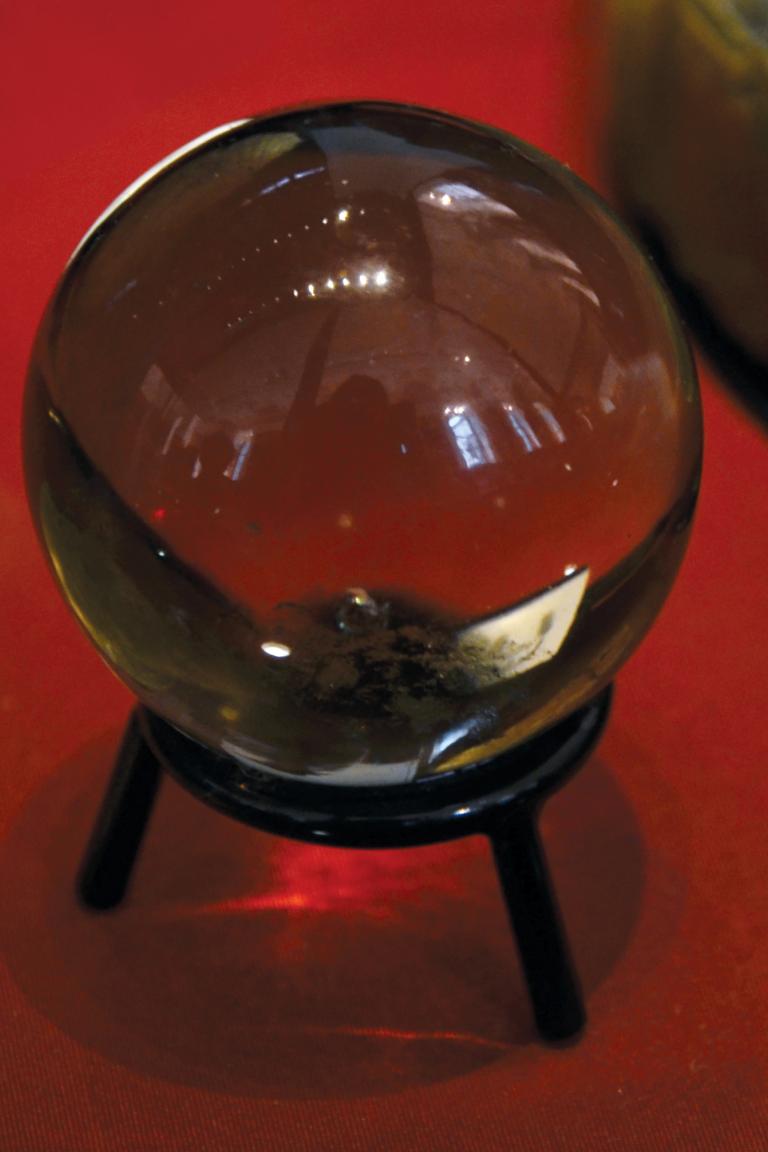
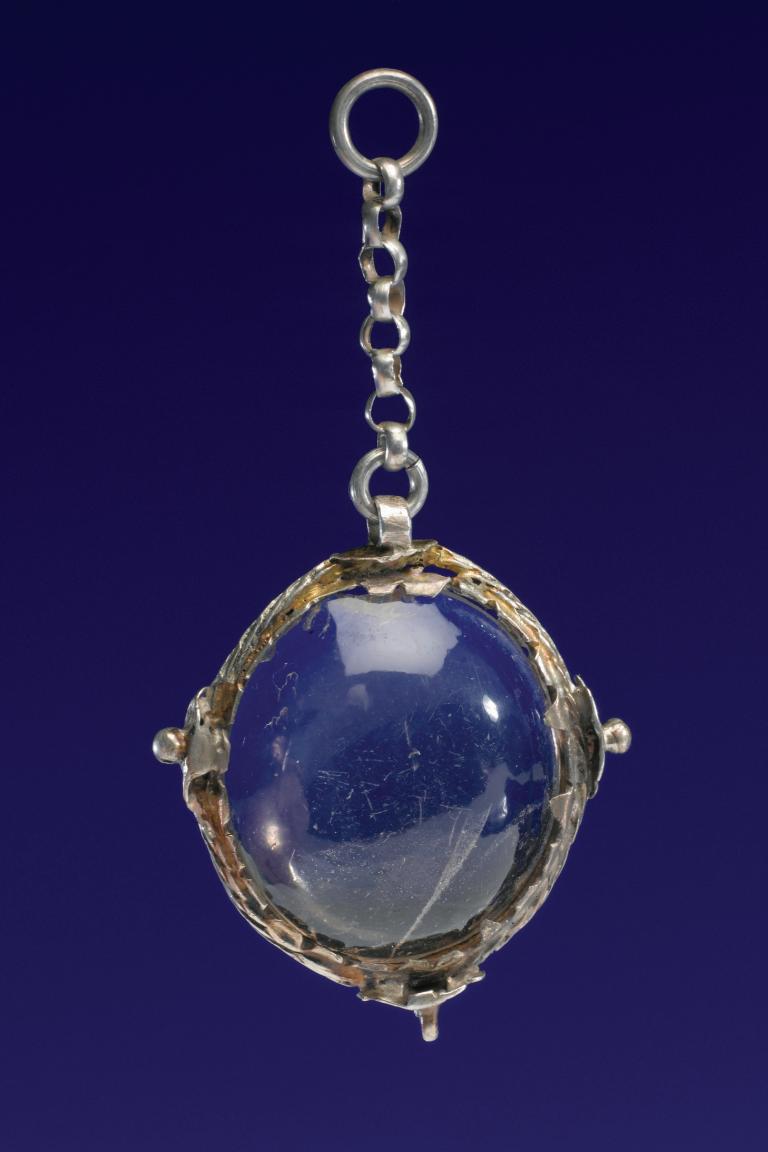
Dee was a mathematician, natural scientist, and occultist who served prison time for conjuring before becoming a scientific and medical advisor at the court of Queen Elizabeth I. He possessed what was then the largest private library in England—some 4,000 books and manuscripts, many focused on occult topics. Likely encountering earlier versions of the Sigillum Dei in this vast collection, Dee refined the diagram through celestial communication. Working with a medium and a shew-stone—a mirror or ovoid crystal—he claimed to have received instructions from angels on how to recreate it.
The Last of the Sumerians
Derided as irrational and dismissed as fraudulent during the Enlightenment and the Industrial Revolution, alchemy and other occult endeavors were supplanted in institutions and official circles by empirical science and rationalist thought, though they continued underground. German sociologist Max Weber (1864–1920) described this shift as Entzauberung or the “disenchantment” of the West. For Weber, this demystification—driven by universal scientific explanation—rendered the world predictable and alienating, reshaping society and public life.

The major figures of the Enlightenment were determined to stamp out “magical thinking.” When Isaac Newton developed the universal theory of gravity, Gottfried Wilhelm Leibniz attacked him for reintroducing qualitates occultae into science, which he claimed René Descartes had so profoundly routed. Newton’s infringement, according to Cartesians, was that, while he was able to mathematically describe how gravity acted upon physical objects, he refused to hypothesize a mechanical explanation for how it operated at a distance across empty space.
In fact, Newton devoted much of his life to studying the occult, particularly alchemy, a subject on which he wrote more than a million words—part of a larger body of esoteric work estimated at three to five million words. He kept these inquiries largely hidden, likely to protect his reputation as a scientist. Few knew of Newton’s occultism, though existing correspondence between him and John Locke reveals their exchange of alchemical secrets and a mutual pledge of silence on the topic. [2]

For centuries after Newton’s death, his interest in the occult remained mostly unknown—suppressed or ignored by his followers. It was not until an auction of his manuscripts in 1936 at Sotheby’s in London that the extent of his esoteric pursuits came to light. Among the buyers was John Maynard Keynes—then the world’s pre-eminent economist—who was stunned by what he discovered.
“Newton was not the first of the age of reason,” Keynes later concluded in a 1946 lecture at the Royal Society of London. “He was the last of the magicians, the last of the Babylonians and Sumerians, the last great mind which looked out on the visible and intellectual world with the same eyes as those who began to build our intellectual inheritance rather less than 10,000 years ago.”
Proliferating Psychic Phenomena
Ultimately, the Enlightenment was unable to extinguish the desire for esoteric knowledge, and by the mid-nineteenth century, such practices were surging again. This phenomenon became known as the “Occult Revival,” a name that fails to capture the wave’s creativity and modernity. The resurgence swept across Europe and the United States, driven by industrialization and urbanization—radical forces that uprooted traditional communities, causing alienation and a renewed search for spiritual meaning. Cultural shifts—such as growing skepticism toward religious orthodoxy—along with new scientific discoveries and reports of psychic phenomena further galvanized the movement.

In Hydesville, New York, the Fox sisters’ early experiments in spirit communication—soon known as séances—began in their family farmhouse in 1848, sparking immense public interest. Their demonstrations of mysterious rappings, first in Rochester and later across the country, catalyzed Spiritualism, the wildly popular and controversial spirit-communication movement. Millions of Americans engaged with the movement over the following decades. Famously, during the Civil War, Mary Todd Lincoln held séances at the White House in an attempt to contact her deceased son, Willie.
In Europe, Allan Kardec’s The Spirits’ Book (1857) codified Spiritism, a related movement blending reincarnation and science. Together, Spiritualism and Spiritism helped pave the way for the later rise of Eastern-influenced spiritual teachings, such as Theosophy; its more Christian-influenced twentieth-century offshoot, Anthroposophy; and other occult groups, including the Hermetic Order of the Golden Dawn.
Major scientific breakthroughs of the late nineteenth century suggested to many the validity of these spiritual endeavors. The discovery of electromagnetic waves, the electron, radioactivity, and X-rays signaled the existence of phenomena imperceptible to human senses, challenging conventional notions of observable reality and inspiring new theories about untapped human potential (including psychic abilities), the nature of the universe, and the possibility of communication with otherworldly beings.

Scientists of the late nineteenth century proposed the existence of a weightless, transparent substance called “ether,” believed to permeate all matter and space and to mediate the transmission of light and other forces through the cosmos. They also posited a fourth dimension—an unseen spatial realm—suggesting that our visible world might be merely a shadow of a higher reality.
These ideas captivated artists and were avidly discussed in both scientific and occult journals, appealing to elites, bohemians, and commoners alike. Across literature, the fine arts, ballet, architecture, music, and dance, rebellion against orthodoxy and tradition took varied forms—often embracing occult ideas to denounce the spiritual bankruptcy of mainstream religion, reject crude materialism, and confront mounting social ills.
Expectant Visitors
Mediumship—the ability to communicate with higher beings and the spirits of the departed—became a tool of spiritual exploration and creative inspiration for thousands of practitioners, whether participating in séances as observers or serving as intermediaries for such communication. These practices opened new possibilities for women, many of whom became mediums and channeled voices from beyond, finding a sense of agency and empowerment, if not gainful employment. The movement became associated with progressive politics, as one of the first Western spiritual organizations to welcome African Americans, who also served as mediums. It aligned with the suffragist cause, advocating for women’s rights and social change.
There were many ways to communicate with invisible beings—through induced trance, clairvoyance, clairaudience, channeling, or with the help of devices like the Ouija board and planchette (a small, heart-shaped instrument used to spell out ghostly messages). Artists of this period were fascinated by the idea of inviting spirits or other entities to create automatic art, bypassing the rational mind and learned technique. Many prominent artists and writers of the nineteenth century experimented with automatic painting and writing while engaged in spirit communication.
Automatism would later become central to the Surrealist movement of the twentieth century. André Breton (1896–1966), the movement’s co-founder and principal theorist, believed that mediumistic artists could bypass preliminary sketches, planning, or formal technique—achieving greater artistic freedom and authenticity.
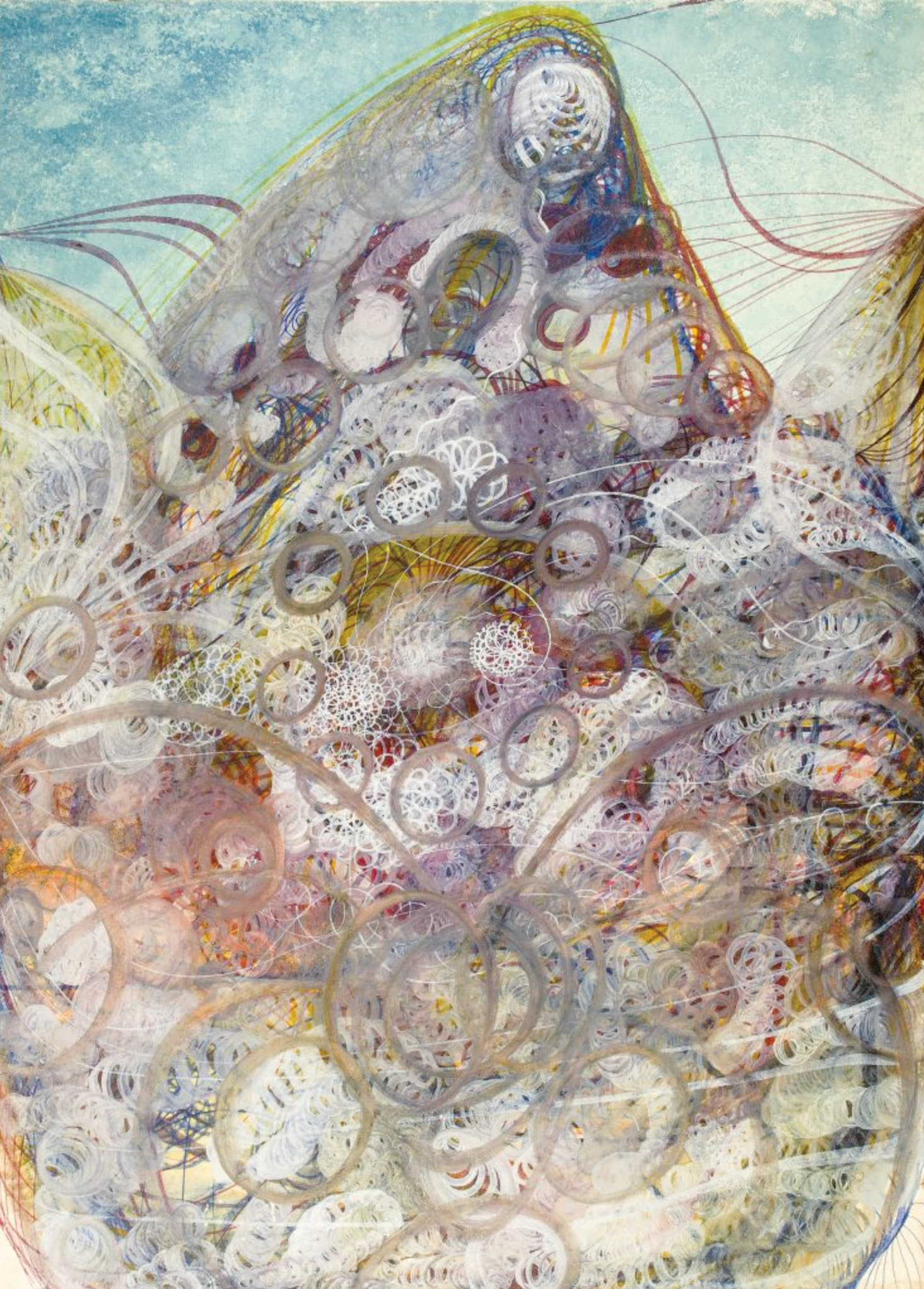
Georgiana Houghton (1814–1884), a British painter and medium, was a pioneer of mediumistic art and a devout Spiritualist. Her collaborations with “spirit guides” in the 1860s resulted in a vibrant body of swirling watercolors and gouaches, featuring abstract shapes and floral motifs evocative of af Klint’s later work. Houghton used color to express different spiritual states: Chinese Orange, for example, conveyed unselfishness; Cobalt Blue, truth; and Crimson Lake, love. [3] These semi-abstract works—the artist considered them representations of spiritual entities—were created several decades before what is conventionally understood as the birth of abstract painting in the early twentieth century.

Houghton, a trained artist who had ceased painting following the death of her sister Zilla years earlier, attended her first séance at the age of forty-five in 1859. Immediately enthralled, she began experimenting with automatic drawing, attaching a colored pencil to a planchette and allowing the spirits she communed with to guide her hand. Eventually, she turned to watercolors. Among her spirit visitors were deceased siblings, royalty, and famous artists, including William Blake and Caravaggio.
Determined to spark a new spiritual direction in painting, Houghton organized an exhibition of her art in London in 1871, renting The New British Gallery and displaying many of her watercolors. Most of the works were small-scale, measuring no larger than thirty-two by thirty-three centimeters. To accompany the show, Houghton created an elaborate publication, sending copies of a special deluxe edition—featuring pink paper, gold lettering, and bound in white calfskin—to Queen Victoria, the Crown Prince of Germany, and Emperor Louis Napoleon. However, she never received a response.
Houghton spent hours at the exhibition each day, which ran for four months, providing viewers with magnifying glasses to better inspect the works, and explaining her artistic vision. Most responses to the exhibition ranged from bemused to outright hostile. “The water-colour drawings, numbering one hundred and fifty-five, are so extraordinary in character, and are so entirely opposed to one’s ideas of art, ancient or modern, that criticism in the ordinary manner becomes difficult, not to say impossible,” one critic wrote in the illustrated weekly society publication, The Queen.
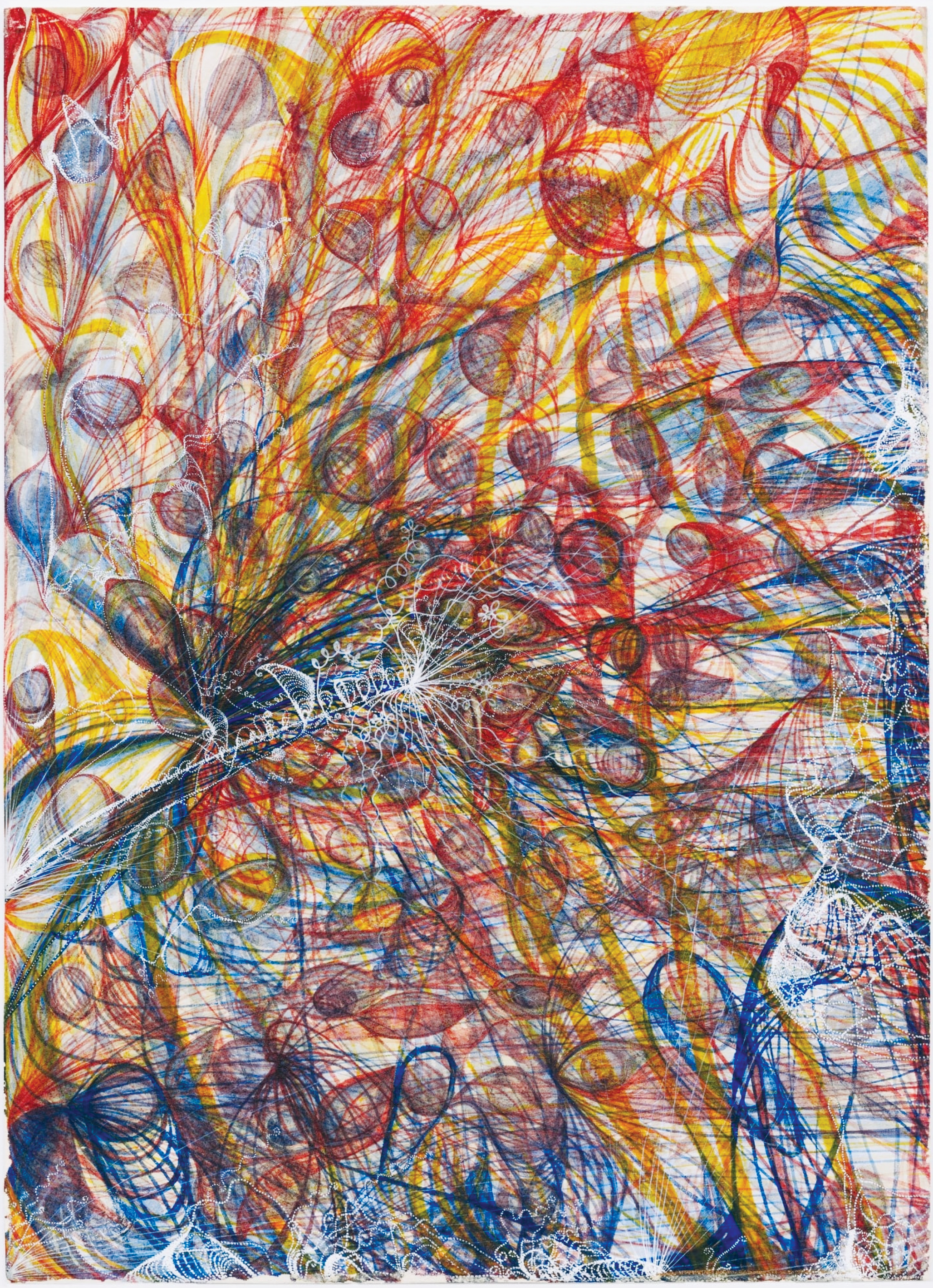
Houghton sold only two paintings and nearly bankrupted herself. Nonetheless, the exhibition was later mentioned by Madame Blavatsky, co-founder of Theosophy, in her book Isis Unveiled (1877). Though only a footnote, the mention in one of the nineteenth century’s most influential books—translated into multiple languages—ensured the exhibition would be remembered.
Unlike af Klint, Houghton today is not exhibited around the world in prestigious galleries, though the Courtauld Gallery in London held a major retrospective in 2016—the first exhibition of her work in the city since the 1871 show. Her art is primarily housed at the Victorian Spiritualists’ Union in Melbourne and The College of Psychic Studies (founded in 1884 as the London Spiritualist Alliance), as part of their impressive collection of spirit art, artifacts, and documents dating from 1850 to the present. While Houghton’s work has gained greater recognition in recent years, it is still often considered part of "outsider art” or art brut—a category introduced to describe works by self-taught artists outside of the mainstream, such as mediums, patients at mental institutions, and hermits.
When the Cherubim Delight
Even artists who weren't ardent Spiritualists like Houghton often shared a similar view of art as a means of communicating with the divine, believing in its mission to awaken the soul to hidden realities. Viewed this way, an artist became a prophet announcing the dawn of a new era, bridging the ordinary and the magical, the visible and the unseen, the manifest and the occult. Imagined as priests and magicians, many poets and artists of Modernism (1890s–1950s) believed in their god-like power to transform reality and create new worlds, much like an alchemist empowered by the Sigillum Dei.
The poets and artists of French Symbolism (late nineteenth century) helped bring the occult into the popular imagination, imbuing symbols with mystical significance to evoke realities unperceived. Figures such as Charles Baudelaire (1821–1867)—a precursor to the movement—Stéphane Mallarmé (1842–1898), and Odilon Redon (1840–1916) drew on esoteric traditions, including alchemy, mysticism, and the supernatural, to convey hidden meanings.
Unlike their realist contemporaries, the Symbolists were uninterested in faithful representations of everyday life and the concrete. While realists venerated nature, Symbolists sought to penetrate beyond the visible world into the eternal. Opposing the materialist, utilitarian worldview that dominated late nineteenth-century European culture, they aimed to initiate the viewer or reader into divine mysteries—inviting them into the sacred realm of Symbolist art.
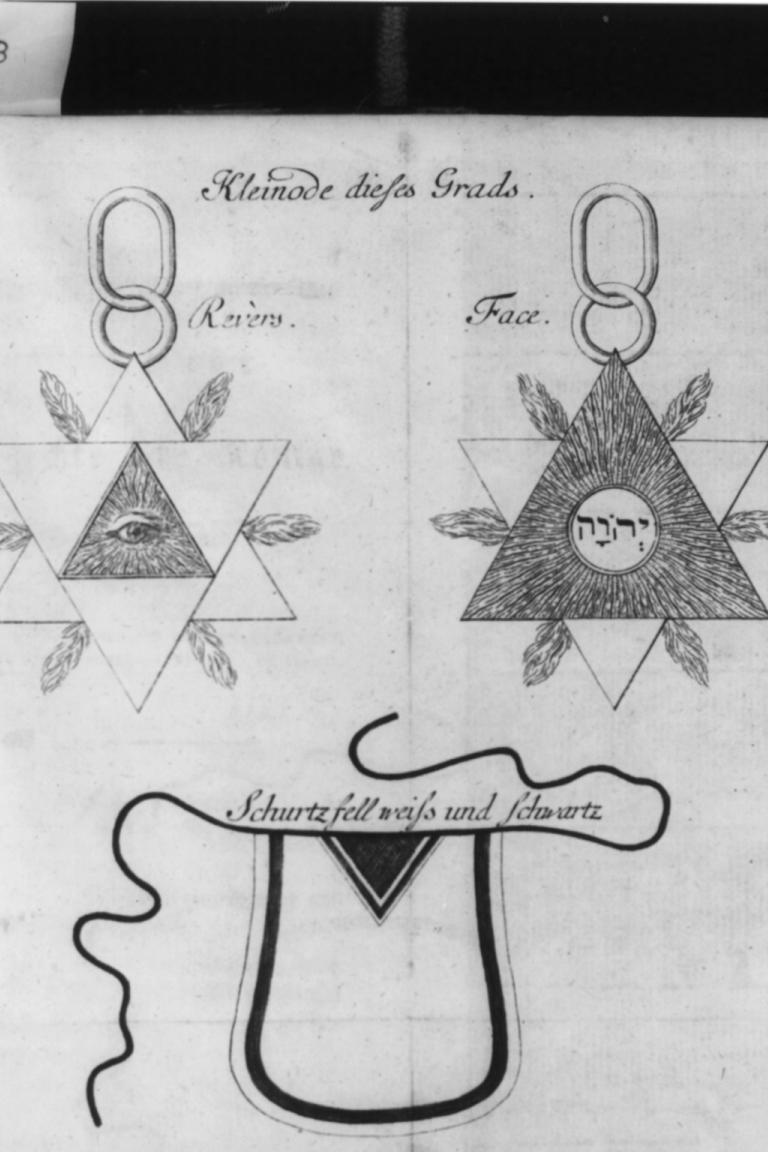
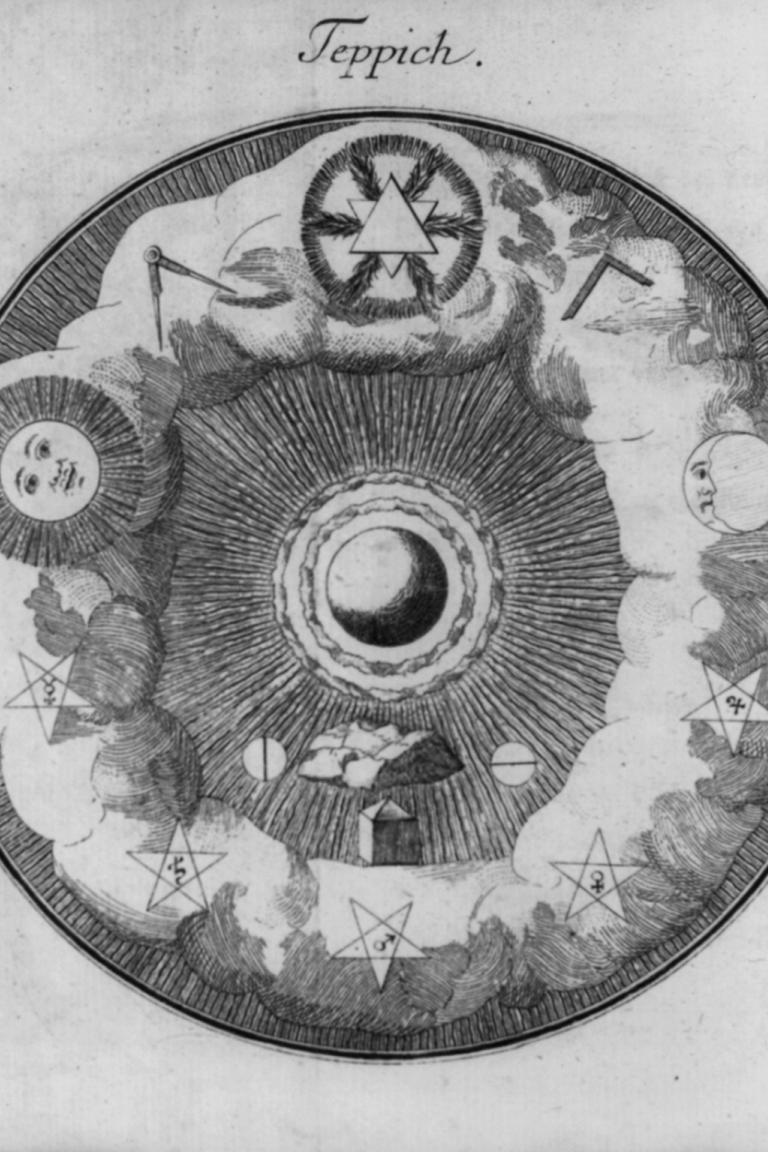
One of the movement’s most colorful and well-known theoreticians was Joséphin Péladan (Sar Mérodack) (1858–1918), an occultist and priest of his own Ordre de la Rose+Croix Catholique. Eccentric and controversial, Péladan—who dressed flamboyantly in long silk and lace tunics, with flowing hair and a pointed beard—zealously promoted his vision of the artist's divine mission:
“Artist, you are a priest: Art is the great mystery, and when your effort results in a masterpiece, a ray of the divine descends on an altar… Artist, you are king: Art is the true empire; when your hand draws a perfect line, the cherubim themselves descend to delight in it as in a mirror… Artist, you are a magician: Art is the great miracle and proves our immortality.”
Péladan’s vision was rooted in Rosicrucianism, an esoteric order that emerged in the early seventeenth century, blending occultism with spiritual traditions such as Christian Gnosticism, Hermeticism, and Jewish mysticism. Initially a secretive brotherhood, it later evolved to include women. In Stockholm, Hilma af Klint and De Fem held séances at a self-built altar adorned with the Rosicrucian symbol: a rose at the center of a cross.

The impresario’s mystical ideals resonated with the international bohemians who flocked to his annual salons, the Salon de la Rose+Croix (1892–1897), in Paris. The gatherings combined haunting music and visual art with esoteric themes—initiation, awakening, and transcendence—drawn from Eastern religions and Orphic mysteries. These highly curated, legendary events—drawing large crowds and featuring some 230 artists—anticipated the multimedia art happenings of the twentieth century.
Despite his impact, Péladan’s vision was backward-looking, rejecting the present while venerating Catholicism, the Middle Ages, and monarchy. He is often remembered as misogynistic for banning women from the salons, though some participated under pseudonyms. Nonetheless, his legacy persists. In 2017, the Guggenheim mounted an exhibition titled Mystical Symbolism: The Salon de la Rose+Croix in Paris, 1892–1897.
Life Units After Death
Years before Péladan’s salons captivated Paris, a parallel and highly consequential esoteric movement was taking root across the Atlantic. In 1875, the Theosophical Society was founded in New York by Helena Petrovna Blavatsky (1831–1891), Henry Steel Olcott (1832–1907), and William Quan Judge (1851–1896). With its famous motto, “There is no religion higher than truth,” the Society promised to reveal the secrets of the universe to its diligent students.
Theosophy sought to unite science, religion, and philosophy through the study of hidden forces latent in human beings. It aspired to create a Universal Brotherhood transcending race, religion, color, and gender. Blavatsky held that an eternal truth underlay all manifestations of matter. Revealed in humanity’s ancient past and refracted into myriad forms—from Western science to Eastern mysticism—this truth, she believed, could be recovered through synthesis. [4]

Born into a Russian aristocratic family, Helena Petrovna married Nikifor Blavatsky in 1849 at the age of seventeen. A military officer and vice-governor of Erivan Province, he was in his forties. Three months later, she fled the marriage and spent more than two decades traveling through Europe, Asia, and the Middle East. She claimed to have lived in Tibet, where she encountered the Mahatmas—spiritual masters—and received advanced training in occult and psychic disciplines at a remote Himalayan monastery.
Blavatsky arrived in New York in 1873 at the height of Spiritualism. She soon formed a close partnership with Olcott—an attorney, journalist, and Civil War veteran who became her longtime collaborator. A respected colonel, Olcott had served on the War Department commission investigating Lincoln’s assassination and was active in New York’s Spiritualist circles. He began promoting Blavatsky and her ideas in the press.
On September 7, 1875, about twenty people gathered at Blavatsky’s Manhattan apartment to hear a lecture on esoteric knowledge titled “The Lost Canon of Proportion of the Egyptians, Greeks, and Romans.” Inspired by the discussion, the group decided to form a society dedicated to the study of esoteric texts and mystical traditions. What began as a small study group quickly grew into an international spiritual movement.

Despite skepticism over Blavatsky’s mystical sources, the Theosophical Society expanded rapidly through her charismatic teachings, prolific writings, and Olcott’s organizational skills. In 1882, the Society moved its headquarters to Chennai, India, a center of Eastern spiritual traditions. Within a decade, it had established branches worldwide. The Society played a key role in bridging Eastern and Western esoteric thought and in popularizing concepts such as karma and reincarnation, along with practices like yoga and meditation, in the West.
Blavatsky believed that certain individuals—known as Mahatmas, Masters, or Adepts—were either born with, or had acquired through intense spiritual discipline, special abilities that allowed them to perceive aspects of reality inaccessible to most. Referred to as siddhis in the Vedic texts, these “superpowers” or spiritual attainments were seen as byproducts of inner perfection. Such developments, she believed, manifested in a person’s aura, with specific colors corresponding to stages of spiritual advancement.
As Theosophy’s leading theoretician, Blavatsky authored several foundational texts, most notably Isis Unveiled (1877) and The Secret Doctrine (1888). These epic works—the latter spanning more than 1,500 pages—drew on both well-known and obscure sources to reveal the occult truths behind a vast range of topics. Largely self-taught, she synthesized teachings from Hinduism, Buddhism, ancient Egyptian lore, Rosicrucianism, and numerous other esoteric traditions.

Few today fully appreciate just how deeply Theosophy shaped modernist art and literature in the late nineteenth and early twentieth centuries. Many artists were inspired by its teachings, including Wassily Kandinsky, Hilma af Klint, František Kupka, Paul Klee, and Piet Mondrian, who once wrote to Theo van Doesburg that he “got everything from The Secret Doctrine.” Theosophy also influenced literary figures such as W. B. Yeats—an active member of the Dublin branch—and James Joyce, who engaged critically with its ideas in Ulysses.
Theosophy’s influence extended well beyond the arts, reaching into religion, politics, and science. In 1889, Mahatma Gandhi met Helena Blavatsky and Annie Besant at the Blavatsky Lodge in London. They encouraged him to read the Bhagavad Gita, a Hindu text that would profoundly shape his spiritual outlook. Gandhi also explored Theosophical writings, including Blavatsky’s The Key to Theosophy (1889). He later wrote: “This book stimulated in me the desire to read books on Hinduism and disabused me of the notion fostered by the missionaries that Hinduism was rife with superstition.” [5]
The Society’s members included eminent scientists such as Alfred Russel Wallace, who co-developed the theory of evolution with Darwin, and Sir William Crookes, a chemist who discovered thallium and advanced atomic physics through cathode-ray research. Inspired by Isis Unveiled, Thomas Edison joined in 1878 and later pursued metaphysical ideas, including his concept of a “spirit phone.” 6 In 1921, he told the New York Times that he was developing a device to detect “life units” after death.

The Vibrating Cosmos
Of particular interest to fin-de-siècle artists, musicians, and writers was Blavatsky’s theory of correspondences, which linked sounds, colors, shapes, numbers, human and non-human beings, and vibrations. She first outlined aspects of this theory in volumes one and two of The Secret Doctrine. However, the concept received its fullest elaboration in the teachings of the Society’s Esoteric Section, established in London in 1888 for a select group of its most devoted students.
Published posthumously, the instructions included diagrams and graphic representations that mapped yogic concepts about the human constitution and chakras onto planets, colors corresponding to their vibrations, and geometric shapes representing both the universe and the human body.

“In the eternal music of the spheres,” Blavatsky wrote in the instructions, “we find the perfect scale corresponding to the colors, and in the number, determined by the vibrations of color and sound, which underlies every form and guides every sound, we find the summing-up of the Manifested Universe. We may illustrate these correspondences by showing the relation of color and sound to the geometrical figures which, as explained in The Secret Doctrine, express the progressive stages in the manifestation of Kosmos.”
The instructions included a diagram that illustrated the cosmic correspondences, explaining the meanings of shapes and colors in relation to the human form. While the uninitiated would be unable to penetrate the mysteries of the universe, the occultist who possesses ancient knowledge could “tune his violin in harmony with the vibrations of color and sound, [which] will extract divine harmony from them.”
“The combination of these powers and the attuning of the Macrocosm and the Microcosm, will when combined give the geometrical equivalent of the invocation Om Mani Padme Hum. This is why the previous knowledge of music and geometry was obligatory in the school of Pythagoras.”
Thoughts Form
Blavatsky’s system of correspondences was further developed—and most lucidly articulated—by second-wave Theosophists Annie Besant (1847–1933) and Charles Leadbeater (1854–1934), a former Church of England preacher. Beginning in 1895, the two embarked on a remarkable collaboration, investigating a range of phenomena through Leadbeater’s claimed clairvoyance and astral travel.
Using the human body as the tool of detection—via clairvoyance—and recording their findings through a quasi-scientific method, these psychic investigations occurred at a moment when scientific knowledge had outstripped the capabilities of its instruments and was leading scientists into speculation. It was also a period in which women remained largely shut out of the scientific and religious establishments.

Besant was a singular figure in Victorian England (1837–1901) whose fame expanded far beyond occult circles. Before joining the Theosophical Society in 1889, she gained notoriety for republishing a booklet advocating birth control, resulting in her arrest and a sensational trial for obscenity; she was later acquitted. A prolific author, public speaker, and Fabian socialist, Besant was a vocal advocate for workers’ rights. In 1888, after exposing the dire conditions at the Bryant & May matchstick company, she led a successful strike of unskilled female workers protesting low pay and hazardous working conditions—a landmark event that ignited a wave of industrial actions across England.
In 1907, Besant became the international president of the Theosophical Society. Having already settled in India, she established her base in Chennai. She grew increasingly involved in the nationalist movement, co-founding the All-India Home Rule League in 1916, which helped lay the foundation for the independence struggle. In 1917, the British interned her for three months over her political activities and seditious writings in New India, her daily newspaper, sparking mass demonstrations demanding her release. Later that year, she became the first woman elected President of the Indian National Congress.
Besant and Leadbeater co-authored several important Theosophical books, including Occult Chemistry: Clairvoyant Observations on the Chemical Elements (1908), which presented clairvoyant insights into atomic structures and described subatomic particles; and Man: Whence, How and Whither (1913), which explored human evolution, reincarnation, and cosmic cycles. Among their publications, Thought-Forms: A Record of Clairvoyant Investigation (1905) significantly influenced the development of abstract art.

Thought-Forms explores the nature of thoughts, which Besant and Leadbeater believed to be living entities formed by vibrations. These could be detected in the aura—a cloud-like, ovoid shape surrounding the body—by those possessing clairvoyance. The quality of a thought determines its color, while its nature determines its form. Black, for example, indicates hatred and malice, whereas “brutal anger will show as flashes of lurid red from dark brown clouds.”
Sudden emotions present themselves as rings, coils, or vortices, while fear manifests as jagged zig-zags. Anger and malice appear in lightning-like shapes, whereas love and devotion take the form of soft, upward-rising bubbles or petals in radiant pinks and blues. Greed forms heavy, hooked, claw-like structures, while clear, focused thoughts—such as those in meditation—appear as sharp, symmetrical spirals or stars in bright yellows or whites.

“The thought forms are not only shaped by vibrations,” art historian Sixten Ringbom wrote, “in their turn, they also produce radiating vibrations which on striking the mental body of another person tend to produce thoughts of the same type in the recipient. This principle of occult physics was believed by the inventors to account for telepathy and related phenomena, and it was also used as an explanation for the moral effect of music and the arts.” [7]
To produce Thought-Forms, Leadbeater described the auras of human subjects to artists—John Varley Jr., Mr Prince, and Miss Macfarlane—who painted according to his clairvoyant descriptions. The result was a striking series of non-objective, abstract images, published a year before af Klint’s first abstract paintings in 1906 and several years before Kandinsky’s turn to pure abstraction in the early 1910s. Thought-Forms influenced several pioneering abstract artists, including af Klint, Mondrian, Kupka, and Kandinsky.
An Inner Necessity
Troubled by what he saw as a spiritual crisis in modernity, Kandinsky turned to Theosophy for inspiration. In his influential treatise Concerning the Spiritual in Art (1911), he decried materialism’s hold on the human soul, writing: “Our minds, which are even now only just awakening after years of materialism, are infected with the despair of unbelief, of lack of purpose and ideal. The nightmare of materialism, which has turned the life of the universe into an evil, useless game, is not yet past; it holds the awakened soul still in its grip. Only a feeble light glimmers like a tiny star in a vast gulf of darkness.”
During his Munich period (1896–1914), Kandinsky and his partner, the artist Gabriele Münter, moved in a circle of artists actively engaged in occultism. Kandinsky’s close friend, the composer Thomas de Hartmann (1884–1956), was deeply involved. According to de Hartmann’s wife, Olga, the two men met to discuss the Theosophical teachings of Blavatsky and Rudolf Steiner (1861–1925), then head of the German Section of the Theosophical Society. They also conducted parapsychological experiments, including psychic table-lifting and telepathic communication with friends in Russia. [8]

In 1908, Kandinsky’s student, the artist Maria Strakosch-Giesler, took him and Münter to Steiner’s lectures. Steiner, a Goethe scholar who had edited the philosopher’s scientific writings, was then a towering figure in European intellectual and artistic circles. A prolific writer and speaker, he delivered more than five thousand lectures across the continent. His color theory—rooted in Goethe’s belief that the artist could elevate the world into the realm of the divine by revealing the hidden laws of nature—was especially influential among avant-garde artists.
Steiner’s spiritual vision drew heavily on Christian esotericism, setting him apart from other Theosophical thinkers. As Rose-Carol Washton Long noted in Artforum, “While Blavatsky emphasized the importance of Hinduism and Buddhism, Steiner used the Revelation to John as the major framework to express his belief in the inevitability of catastrophe before the emergence of a new epoch.” [9] Kandinsky actively read and annotated Steiner’s book Theosophie as well as essays published in his magazine Lucifer-Gnosis.
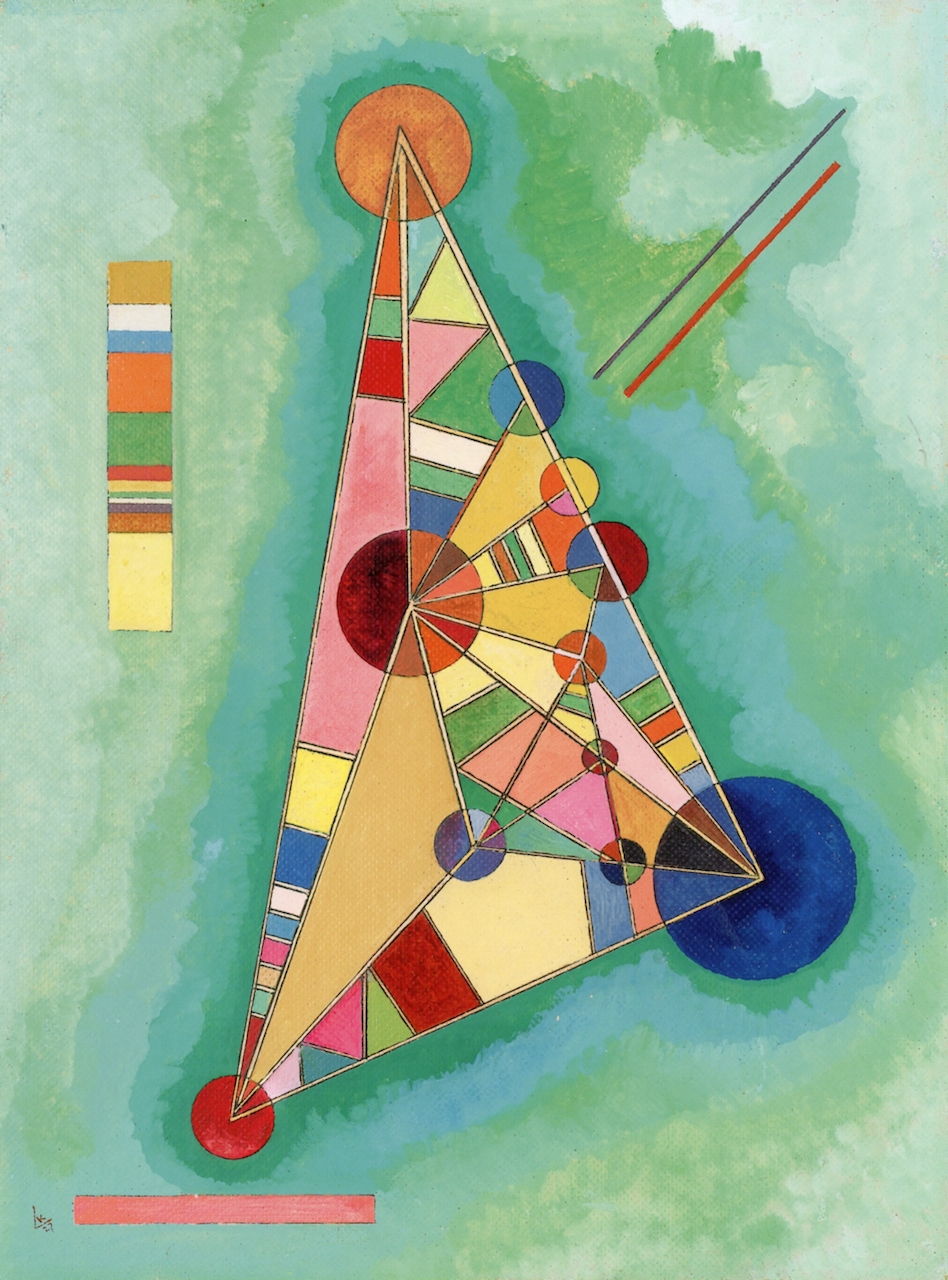
Kandinsky began writing Concerning the Spiritual in 1910, as representational elements receded from his paintings and he moved toward pure abstraction. The treatise was nothing less than a call for a revolution in art—one that would usher in a new spiritual epoch. He envisioned the artist standing alone at the apex of a spiritual triangle, creating works incomprehensible to the broader base of society below. As human consciousness evolved, he argued, the triangle would rise, and society would gradually come to embrace the artist’s vision.

Inspired by Theosophy’s teachings, Kandinsky believed the purpose of art was not to faithfully represent the external world but to realize an “inner necessity”—a spiritual potential lying within. In a section of his treatise titled “The Spiritual Turning Point,” he cites Blavatsky and praises Theosophy as one of the “greatest spiritual movements” of his time to address this need. By contrast, he associated realism and Impressionism with the scientific materialism he derided: an aimless, materialistic art made for connoisseurs caught in the scramble for possessions. To paint inner necessity, he argued, required moving beyond representational elements.
Like Joséphin Péladan—though less dogmatic—Kandinsky believed in the artist’s demiurgic powers. His writings offer specific instructions on how to make the soul vibrate and how to intimate the existence of invisible worlds, drawing on his fascination with synesthesia—the overlap of the senses, such as seeing colors when hearing music.
Inspired by composers like Arnold Schoenberg and Richard Wagner, Kandinsky envisioned abstract art as visual music, where colors and forms harmonize to evoke spiritual resonance. “Color is the keyboard,” he wrote in his treatise. “The eye is the hammer, while the soul is a piano of many strings. The artist is the hand through which the medium of different keys causes the human soul to vibrate.”

Instrument of Ecstasy
Long before Concerning the Spiritual, Hilma af Klint had already embraced abstraction. Like Kandinsky, her artistic experiments were driven by spiritual conviction and a deep dissatisfaction with the existing social order. While many contemporaries engaged in esoteric practices, af Klint stood apart for the intensity of her devotion—often reaching states of rapture. “I was the instrument of ecstasy,” she once recorded in her notebooks.
Her spiritual vision also carried a radical political dimension. In 1906, the year she created her first abstract paintings, af Klint wrote: “[T]he work must be carried forward by the people of the earth; the work refers to liberation from the oppression of the higher classes.”
Af Klint’s interest in Spiritualism began early—she was only seventeen when she attended her first séance in 1879—and deepened after the death of her younger sister, Hermina, the following year. In 1896, she and four other women formed De Fem, receiving messages from spiritual beings who claimed to represent higher authorities they called the “High Ones.” These entities resembled Blavatsky’s Mahatmas. In Theosophy, the Masters are believed to serve as guides and protectors of the Society, communicating only with a select few.
While evoking the Mahatmas, these spirits, Julia Voss wrote in Hilma af Klint: A Biography (2022), behaved more like Roman Catholic saints. Af Klint described the first visitor, Gregor, as a priest from the time of Pope Gregory VII in the eleventh century, who sought to free the Church from heresies. From the beginning, Voss wrote, it was clear that De Fem was in contact with “dissenters and deviators.”

The spirits all bore the names of Christian saints, except for Ananda, who first appeared in 1900. Ananda is an Indian name and also the name of Buddha’s favorite disciple—known for his close friendships with women and for persuading the Buddha to allow women to join the Sangha as Bhikkhunis (fully ordained nuns). Henry Steel Olcott wrote about Ananda in his influential Buddhist Catechism (1881), a widely distributed text that helped introduce Buddhist thought to Western audiences.
De Fem met weekly, sometimes dressing in white robes and wearing brooches adorned with the Rosicrucian rose and cross. They studied Theosophical texts together, including The Secret Doctrine and Leadbeater’s Invisible Helpers (1899), and held séances. Each session began with the recitation of Bible passages, after which they held hands in a chain to form an electrical circuit. Messages were received, often with the aid of a psychograph—a device for automatic writing or drawing guided by spiritual forces—or a planchette. These communications manifested as written words or symbolic images.
The images were produced rapidly, in stark contrast to the careful, methodical approach that three of the group—af Klint, Anna Cassel, and Cornelia Cederberg—had learned through their formal art training. As Voss noted, “The variety of forms that materialized session after session and page after page seemed inexhaustible. Geometric elements included spirals, circles, ellipses, grids, and diagonals. Flowers, leaves, trees, fruit, eyes, vases, and stairs appeared on the paper.”

The spirits first revealed af Klint’s future mission to create the “astral paintings” in 1904, the same year she joined the Theosophical Society. Operating the psychograph, Cassel spelled out the message: “Ananda prays for you, Hilma. You should rest for days, quiet and still. Look toward images, old ones, images that wait for you. Just have patience, then you will be guided, calmly and surely, to the goal that lies before you.” But Ananda also cautioned her not to “expect the signals and symbols that you have developed with much effort will be understood by the brothers that you meet, but to work hard for the future.”
The task came into clearer focus in 1906 with the commission for Paintings for the Temple. Af Klint threw herself into the work, completing the monumental series of 193 paintings between 1906 and 1915. She created them sequentially in thematic subgroups: Primordial Chaos, Eros, The Ten Largest, Evolution, The Swan, The Tree of Knowledge, The Doves, and Altarpieces. In her notebooks, af Klint called the series her life’s great work, considering the paintings “groundbreaking” and recording that they would “astound humanity.”
The artworks, she wrote, “were painted directly through me, without any preliminary drawings, and with great force.” She “had no idea what the paintings were supposed to depict”; nevertheless, she worked “swiftly and surely, without changing a single brushstroke.” Voss notes this was only partially true: From the beginning, the process was a dialogue, with questions and answers traded between spheres rather than direct commands. In 1907, af Klint wrote, “It was not that I should blindly obey the lords of the mysteries, but that I should imagine them always standing next to me.”
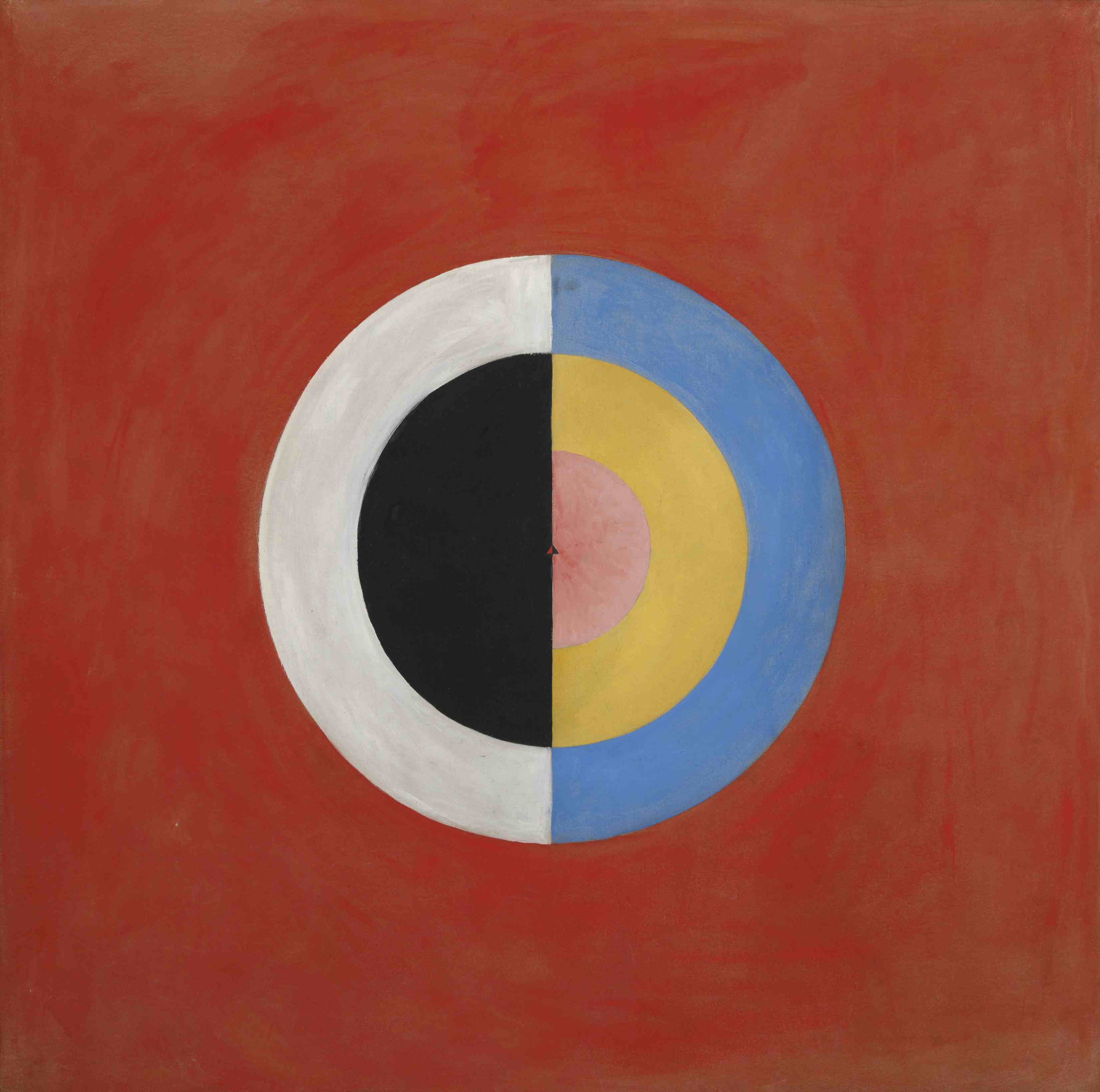
Af Klint’s enigmatic symbolism draws deeply from occult traditions. In The Swan series (1914–1915), she employs one of occultism’s most enduring images: the swan. In alchemy, the swan represents both a stage of spiritual refinement in the alchemist’s journey and the union of opposites needed to create the philosopher’s stone. For Theosophists, the white and black swans—Hamsa and Kala Hamsa—symbolize wisdom, discernment, and divinity.
In the first painting, a black swan and a white swan face each other as mirror images, embodying the dualities of light and dark, male and female, life and death. As the series progresses, the swans multiply and gradually transform into geometric forms—spirals of vibrating color, concentric circles, and cubes. These forms become increasingly dematerialized and transparent, evoking Leadbeater’s astral plane, an intermediary realm between the physical and higher spiritual planes. On this plane, af Klint envisioned male and female fusing into unity, transcending duality and chaos.
Af Klint believed that her works—particularly Paintings for the Temple —should be housed in a white spiral temple of her own design. In her notebooks, she sketched plans for the unrealized building and specified materials: granite for the façade, alabaster for the interior. The temple was to be built on an island, possibly Munsö or Adelsö in Sweden. Visitors would ascend a spiral stairwell to a viewing platform at the top.

Museum of Non Objective Painting
Her paintings were never meant for dealer galleries or academies; af Klint intended them to be seen in a spiritual context. To that end, she photographed the works and created miniature versions, arranging them into ten landscape-format albums with blue bindings. These portable albums allowed her to travel with the images and seek out exhibition opportunities.
In 1921, af Klint visited the Goetheanum, a newly built domed spiritual center in Dornach, Switzerland, founded by Rudolf Steiner as the headquarters of his esoteric movement, Anthroposophy. After breaking with the Theosophical Society in 1913, Steiner established Anthroposophy that same year. Deeply immersed in his ideas, af Klint owned 120 of his books and frequently referenced him in her notebooks. She met Steiner at the Goetheanum and showed him her work, possibly hoping it would be displayed there. His response was not hostile—as is often mischaracterized—but it lacked enthusiasm.
After many attempts, af Klint finally succeeded in organizing an exhibition of her spiritual works in London in 1928, with the help of Dutch eurythmic dancer [10] and actress Peggy Kloppers-Moltzer. The occasion was the World Conference of Spiritual Science, hosted by the Anthroposophical Society in England at the Friends Meeting House—a short walk from Virginia Woolf’s home at 52 Tavistock Square. The event marked the first time all branches of Anthroposophy gathered in one place.

Kloppers-Moltzer, who sat on the organizing committee, overcame internal resistance to secure af Klint a solo exhibition. The artist requested a private room, preferring that her paintings not be shown as part of a larger exhibition of Anthroposophical art. She was given a space that could accommodate fifty to a hundred people. Af Klint traveled to London and spoke at the exhibition opening about the connection between her work and Rosicrucianism.
The conference was considered a massive success, drawing some two thousand participants. Lectures were packed, and eurythmic dance performances featured instruments crafted by Anthroposophists. An exhibition showcased small carvings and sculptures by children whom doctors had deemed mentally and physically disabled, demonstrating Steiner’s approach to curative education. The Times of London ran a review of the art on display, but af Klint was not mentioned. No recorded responses to her exhibition survive, nor is it referenced in her notebooks. Her presentation appears to have made little impact.
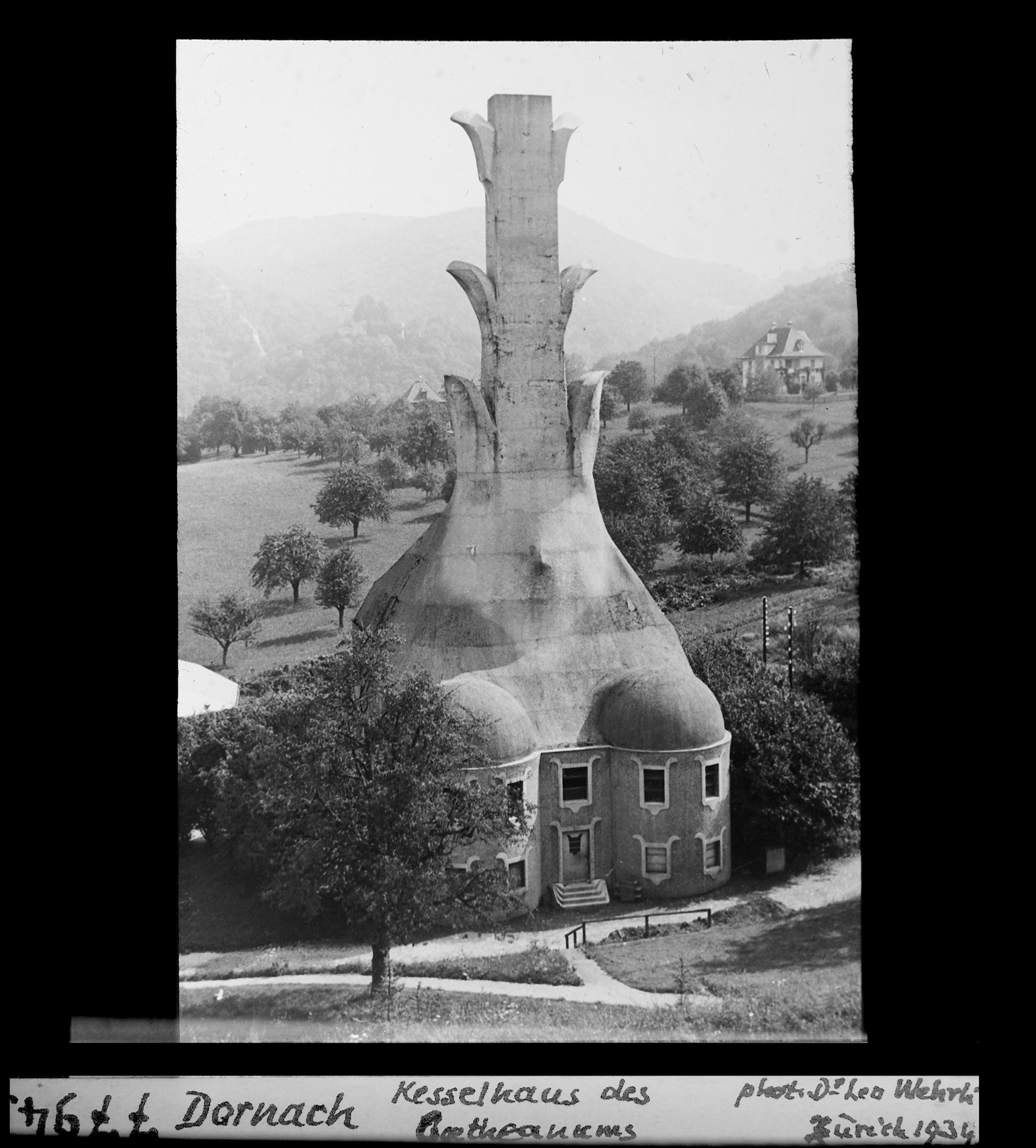
Af Klint had considered destroying her work. In 1924, she wrote to Steiner to ask whether she should do so or if her paintings might still be of use. She later recounted his response during a lecture at the Anthroposophical Society in Stockholm: “The answer was that it would be a shame to destroy it, and that it could be used and was useful. As previously mentioned, the time should now be right to communicate much of the work’s content that individual members of the society may be able to take an interest in considering it in the place that it is located.”
Steiner died the following year, and af Klint’s efforts to gain recognition for her paintings within Anthroposophy ultimately failed to bear fruit. She lost faith in her era’s ability to understand her art and eventually abandoned the idea altogether. In 1932, amid the dark tide of fascism sweeping across Europe, she entrusted her work to the future, instructing that the paintings remain unseen until twenty years after her death.

More than a century after completing Paintings for the Temple in 1915, af Klint’s vision would partially manifest. The Guggenheim, which hosted Paintings for the Future in 2018–19, bears a striking resemblance to her sketches, with its spiral structure and snow-white façade. Indeed, the building was conceived in much the same spirit. Hilla Rebay (1890–1967), the museum’s first director, commissioned Frank Lloyd Wright (1867–1959) to design it in 1943. A German baroness, artist, and Theosophist, Rebay was deeply engaged in astrology, Buddhism, and Zoroastrianism. She envisioned the museum as a “temple of non-representation and reverence,” once declaring, “Non-objectivity will be the religion of the future.”
Like af Klint, Rebay began as a painter in the accepted academic style before turning to abstraction. Her break with representation came after reading Kandinsky’s Concerning the Spiritual. She attended Steiner’s lectures as a teenager in 1904 and 1905. After moving to New York in 1927, Rebay befriended Solomon Guggenheim and, having painted his portrait, became his adviser on collecting. Through her network, Guggenheim acquired 150 Kandinsky paintings. At the museum’s 1939 opening—then known as the Museum of Non-Objective Painting and housed in a temporary location—Rebay burned incense and played Beethoven and Bach. The New York Times described the space as “an esoteric, occult place in which a mystic language was spoken.”
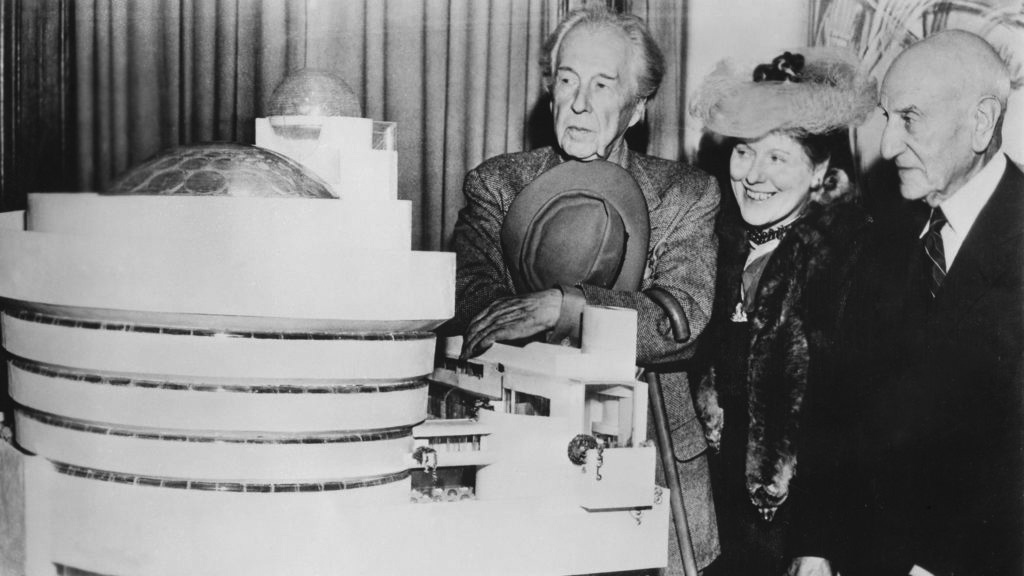
Wright drew inspiration for his early Guggenheim designs from the stepped pyramid at Saqqara in Egypt, as well as the ziggurats of Assyria and Babylonia. Sadly, he died just a month before the building opened in 1959. His wife, Olgivanna, later recalled her first impression of the completed structure: “The miracle of Fifth Avenue stood as a spirit from another world, glowing with golden bonds of light, moving upward in an ever-widening spiral.”
A Story of Progress
Despite overwhelming evidence, art historians and museum curators denied for decades the pivotal influence of occultism on modern art. Yet figures like af Klint, Mondrian, Matyushin, Malevich, and Kandinsky left ample proof of their engagement with esoteric movements, in both their writings and artworks. [11] Fear of ridicule and professional ostracism likely deterred many from deeper scholarly inquiry—and for good reason: Critics of modern art often seized on these esoteric connections in their attacks.
T.H. Robsjohn-Gibbings, a British-born architect and furniture designer, excoriated modern art in his book Mona Lisa’s Mustache: A Dissection of Modern Art (1947), a scathing critique denouncing modernism as a regression into the primitive realm of magic—which opposed the foundational Western values of “logic, order, truth, and reason.” Attacks also came from the political left. In his essay “Theses Against Occultism” (1946–47), Theodor Adorno argued that occultism reflected a regression of consciousness under capitalism, concluding with the stark declaration, “No spirit exists.”
The backlash against occultism had already been building for decades, beginning during Blavatsky’s lifetime. In her later years, she faced accusations of fraud and fabricating psychic phenomena. After the Second World War, occultism became associated with Nazism—most infamously through the Thule Society—further damaging its image.
As Europe descended into barbarism in the 1930s, the history of abstract art was being written in New York. This narrative came to be dominated by Alfred H. Barr Jr. (1902–1981), the inaugural director of the Museum of Modern Art. For Barr Jr., the development of abstract art was a story of progressive aesthetic innovation, tracing a linear path from Impressionism through Cubism to pure abstraction. His medium-focused, formalist interpretation—stripped of political, spiritual, or social content—was later adopted by influential critics such as Clement Greenberg (1909–1994). This perspective crystallized in the Museum’s landmark 1936 exhibition Cubism and Abstract Art. No women artists were included in the show.
This narrative proved resilient, remaining largely unchallenged until 1970, when Finnish art historian Sixten Ringbom (1935–92) published his groundbreaking study The Sounding Cosmos: A Study in the Spiritualism of Kandinsky and the Genesis of Abstract Painting. Focusing on Kandinsky, Ringbom uncovered the long-overlooked role that occultism played in the development of abstract art. Far from being a private hobby or incidental interest, he argued, Kandinsky’s well-documented engagement with occultism, particularly Theosophy, is crucial to understanding his work.

Ringbom’s inquiry began in 1965 after a chance discovery at the Donner Institute in Finland, where he worked as a librarian to supplement his teaching income. The institute, affiliated with Åbo Akademi University, had been founded by Anthroposophists in 1959 and housed the largest Nordic collection devoted to comparative religion. There, he came across a copy of Thought-Forms and was struck by how closely some of its illustrations resembled later works of abstract art.
The Sounding Cosmos is now considered a classic of art history. Yet upon its release, the book was largely ignored by the art history establishment, failing to receive even a single review in scholarly journals. Its controversial subject matter led to Ringbom’s ostracism by colleagues who rejected any association between abstract art and what they saw as disreputable or scandalous. For years, he faced sharp criticism from Kandinsky experts—“occasionally in terms verging on the insult,” as Italian sociologist Massimo Introvigne noted.
The repercussions didn’t end there. After the book’s publication, the Kandinsky archives at the Städtische Galerie in Munich blocked other scholars from accessing their occult materials. The gallery’s director, Hans Konrad Röthel (1909–1982), accused Ringbom of publishing documents he had promised to keep confidential.
Frustrated by the book’s reception, Ringbom wrote in a letter that he “had a feeling that the whole question of the irrational sources of modernism had been swept under the carpet by a scholarly community anxious to save the respectability of the modern movement. For that reason, I felt every available piece of evidence had to be hammered into the thick heads of the same community.”

The Occult Explosion
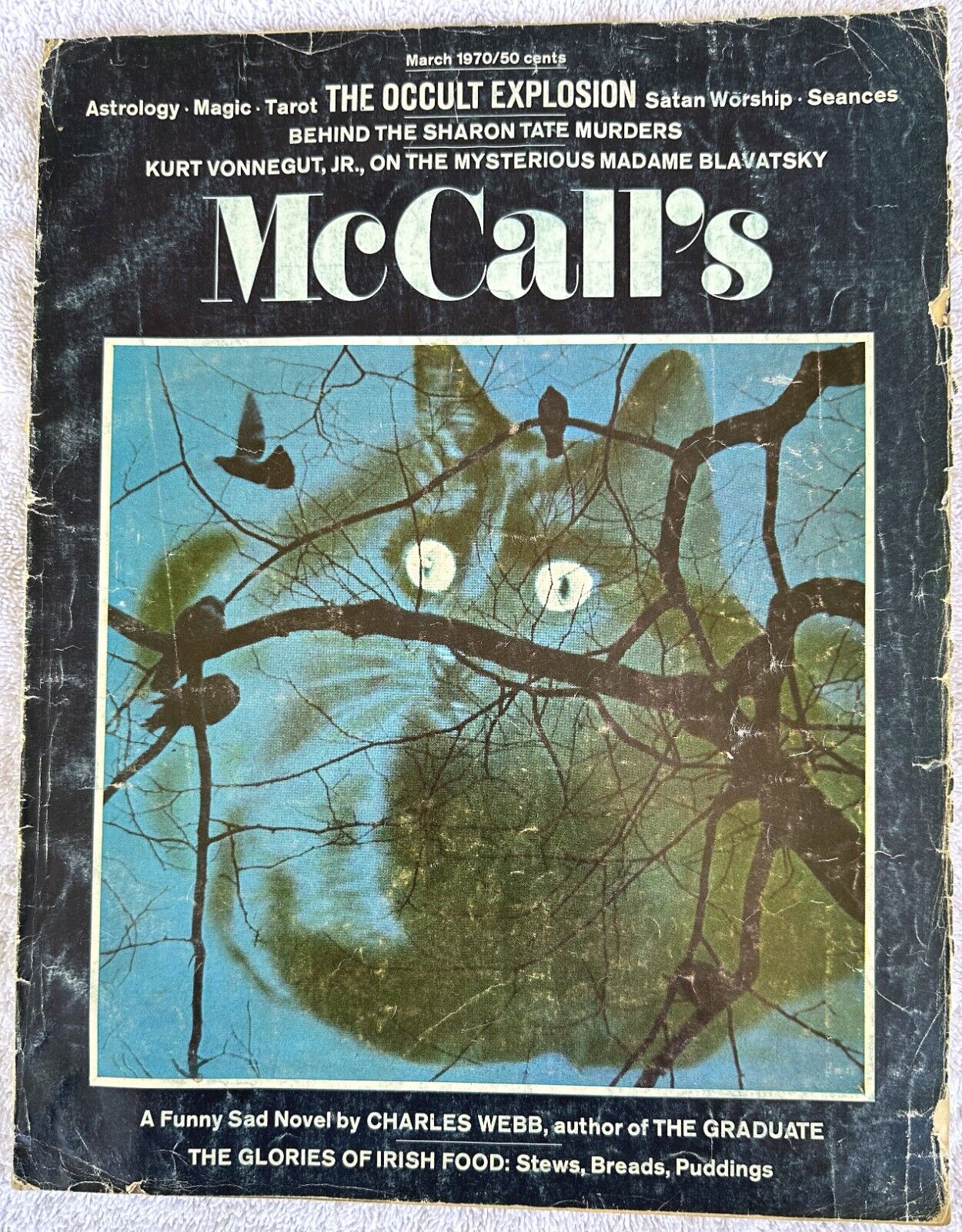
Even if the art history establishment was not yet ready to acknowledge occultism’s role in the development of modern art, the surge of popular interest during the 1960s and 1970s made pursuits like witchcraft, practical magic, tarot reading, astrology, and communication with angels widely accepted in mainstream culture. Just how widespread this fascination had become is evident from the March 1970 cover of the popular women’s monthly McCall’s. Above a sinister-looking cat and a flock of blackbirds, the headline declares: “THE OCCULT EXPLOSION. Astrology. Magic. Tarot. Satan Worship. Seances.”
The magazine’s editor, Shana Alexander, coyly confessed that she had “been attracted to astrology, occultism, and magic” all her life, though she admitted she still preferred to “play it safe where the powers of darkness are concerned.” A section titled “The Age of the Occult,” tucked between recipes and cleaning product ads, explored the many facets of occultism in contemporary American culture.
Writing for that same issue’s millions of readers, Kurt Vonnegut Jr. reintroduced Blavatsky in a feature titled “The Mysterious Madame Blavatsky.” He addressed both the controversies surrounding her name and the phenomena she inspired, portraying her as brave, brilliant, “playful to the point of rascality,” and a powerful cultural force: “At a minimum: Madame Blavatsky brought America wisdom from the East, which it very much needed, which it still very much needs.”
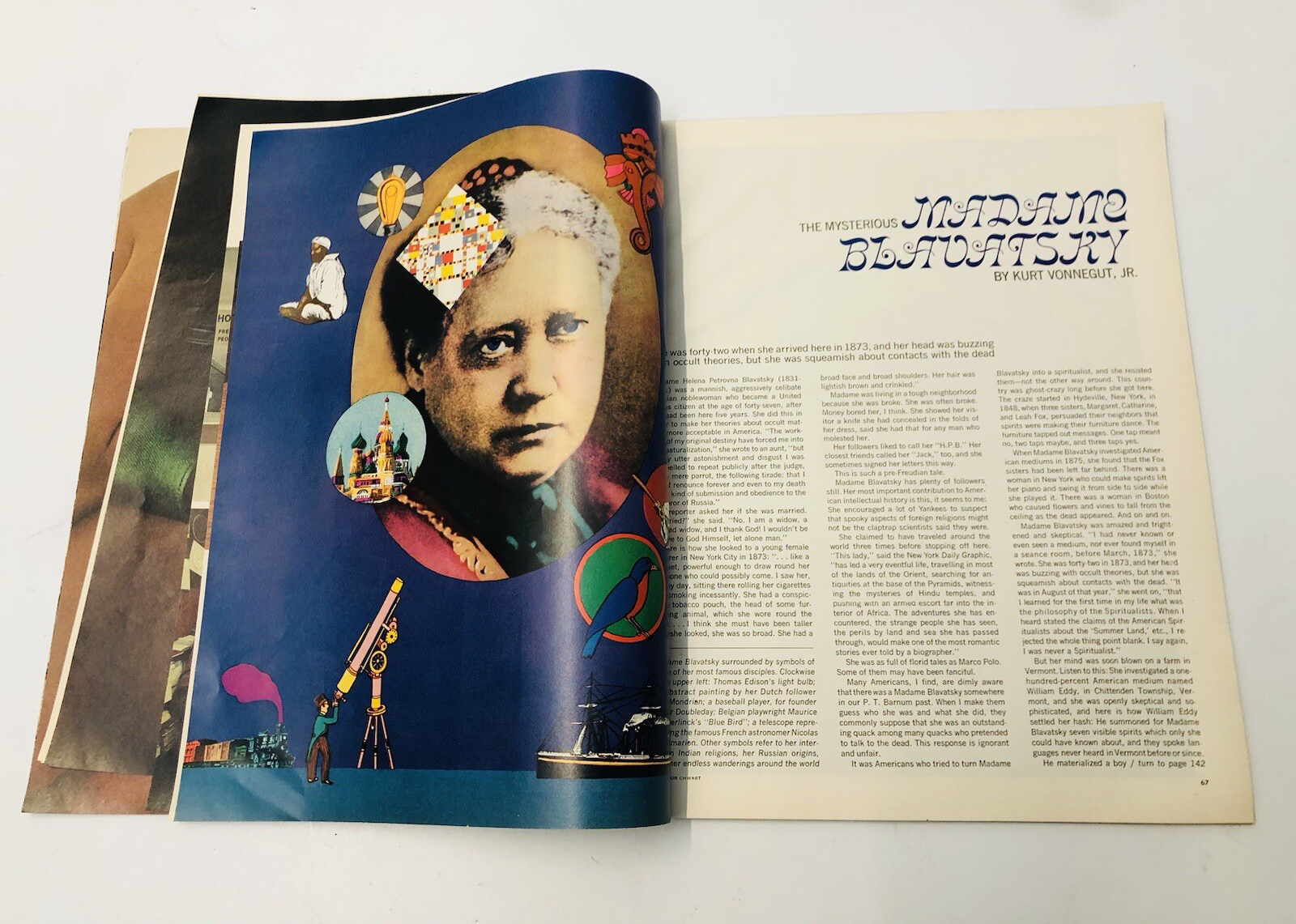
Vonnegut Jr.’s piece was paradigmatic of the West’s “re-enchantment,” a cultural shift that scholar Christopher Partridge aptly described in 2004 as “occulture”—“the new spiritual atmosphere in the West; the reservoir feeding new spiritual springs; the soil in which new spiritualities are growing; the environment within which new methodologies and worldviews are passed on to an occulturally curious generation.” [12] In its wake, scholars of literature, popular culture, religion, and art history finally turned attention to occult trends and their place within the contemporary Western cultural and religious imagination.
When Sixten Ringbom stumbled across the crucial influence of occultism on Kandinsky’s art in 1965, he found himself in a “manic state of mind,” writing excitedly to his wife that he had “DYNAMITE” in his baggage. But the discovery proved more like a time bomb, taking two decades to detonate.
The major turning point came in 1986 with the groundbreaking exhibition The Spiritual in Art: Abstract Painting 1890–1985 at the Los Angeles County Museum of Art. Curated by Maurice Tuchman, it is widely regarded as the first exhibition to foreground modern art’s deep indebtedness to occult movements. After securing funding, Tuchman first visited Ringbom, who was among several contributors to the accompanying 435-page volume of art historical scholarship on the esoteric roots of modern art.
The Spiritual in Art also marked the first time af Klint’s works had been exhibited since her death in 1944. After decades of oblivion, Tuchman placed her paintings alongside those by Kandinsky, Mondrian, and Malevich. It was a breakthrough in visibility, though it received a hostile response. New York Times art critic Hilton Kramer wrote:
“Hilma af Klint’s paintings are essentially colored diagrams. To accord them a place of honor alongside the work of Kandinsky, Mondrian, Malevich, and Kupka… is absurd. Af Klint is simply not an artist in their class and—dare one say it?—would never have been given this inflated treatment if she had not been a woman.”

Af Klint’s time still had not come. Nonetheless, the exhibition helped set the train in motion—for both her work and the broader acceptance of occultism’s role in modern art. Another major catalyst had already arrived three years earlier with the publication of Linda Dalrymple Henderson’s monumental study The Fourth Dimension and Non-Euclidean Geometry in Modern Art (1983).
Widely regarded as the definitive work on the relationship between non-Euclidean geometry, the fourth dimension, and modern art, Henderson’s book mapped the cross-disciplinary intersections of art, science, and occultism in the early twentieth century. “By definition,” Henderson wrote, “it is extremely difficult to imagine worlds outside of our experience. For that we are as likely to receive guidance from our artists, and philosophers, as from our mathematicians and scientists.”
Henderson’s book, along with milestone exhibitions like The Spiritual in Art, signaled a shift toward scholarly and institutional recognition. This interest reached a crescendo in the new millennium with a wave of major exhibitions—such as L’Europe des Esprits ou la fascination de l’occulte, 1750–1950 (2011–12) in France and Enchanted Modernities: Mysticism, Landscape, and the American West (2014) in the United States—alongside a mushrooming of scholarly conferences and academic publications exploring occultism’s role in modern art.
More recently, the Tate Modern’s 2023 exhibition Hilma af Klint & Piet Mondrian: Forms of Life contextualized both artists’ evolution from figurative to abstract art, emphasizing their Spiritualist, Theosophical, and Anthroposophical sources of inspiration. In 2024, the Kunstsammlung Nordrhein-Westfalen in Düsseldorf followed with Hilma af Klint and Wassily Kandinsky: Dreams of the Future. It is no longer controversial to afford af Klint a place in the pantheon of modern artists.

Into the Fourth Dimension
From the vantage point of the twenty-first century, it is almost comical to reflect on art historians’ long denial of modern art’s occult roots. Clearly, these artists had more in mind than aesthetic innovation. Often, they couldn’t have been more explicit. Writing in the Russian avant-garde art magazine Soyuz Molodyozhi in 1913, artist Mikhail Matyushin heralded what many perceived as the dawning of a new era of spiritual art:
“[F]ollowing the revelation of the universal human soul—blazing up with a wonderful fire of divinely creative thought now here and now there—we sense the advancing regal moment of the passage of our consciousness into a new phase of dimension, out of three-dimensional into four-dimensional. Artists have always been knights, poets, and prophets of space in all eras. Sacrificing to everyone, perishing, they opened eyes and taught the crowd to see the great beauty of the world which was hidden from it.”
Hilma af Klint, by contrast, was more circumspect in her expectations for the present. She often expressed the belief that the world was not ready for her “paintings for the future.” By instructing that her work not be shown until twenty years after her death, Julia Voss wrote, af Klint “catapulted her life’s work into the future, out of the first half of the twentieth century into the second, safe from the judgment of her contemporaries.” She knew her paintings—commissioned by invisible higher beings—would resonate most with a particular kind of viewer: someone liberated from the constraints of conventional rationality and attuned to unseen forces.
In the end, af Klint’s confidence was vindicated. Her success is inextricably tied to the gradual acceptance of occultism’s role in the invention of modern art. In his 1971 classic The Occult: A History, Colin Wilson expressed hope for a time when “we can accept certain occult phenomena as naturally as we now accept the existence of atoms.” As we peer into the abyss of the unknown in a rapidly changing and unpredictable world, perhaps we are finally ready to take that leap.
Footnotes:
[1] Don Skemer, “After 1453: Greek Manuscripts in the Ottoman Empire and Beyond,” PUL Manuscripts News (Princeton University Library), July 5, 2018, https://blogs.princeton. edu/manuscripts/2018/07/05/after-1453-greek-manuscripts-in-the-ottoman-empire/.
[2] Richard S. Westfall, “Newton and Alchemy,” in Occult and Scientific Mentalities in the Renaissance, ed. Brian Vickers (Cambridge: Cambridge University Press, 1984), 315–35.
[3] Jennifer Higgie, “The Substantiality of Spirit: Georgiana Houghton’s Pictures from the Other Side,” The Public Domain Review, February 21, 2024, https://publicdomainre- view.org/essay/the-substantiality-of-spirit/.
[4] For a detailed introduction to Theosophy, see Blavatsky’s The Key to Theosophy (1889), which provides a concise explanation of the main concepts in a question- and-answer format.
[5] Mahatma Gandhi, An Autobiography or The Story of My Experiments with Truth, trans. Mahadev Desai, ed. Shriman Narayan (Ahmedabad: Navajivan Mudranalaya, 1929), 92.
[6] Isaac Lubelsky, “The Birth of Theosophy,” Engelsberg Ideas, August 6, 2020, https://engelsbergideas.com/essays/ the-birth-of-theosophy/.
[7] Sixten Ringbom, “Art in ‘The Epoch of the Great Spiritual’: Occult Elements in the Early Theory of Abstract Painting,” Journal of the Warburg and Courtauld Institutes, vol. 29 (1966), 400.
[8] Massimo Introvigne, “The Sounding Cosmos Revisited: Sixten Ringbom and the ‘Discovery’ of Theosophical Influences on Modern Art,” Nova Religio: The Journal of Alternative and Emergent Relations, vol. 21, no. 3 (2018), 35.
[9] Rose-Carol Washton Long, “Kandinsky and Abstraction: The Role of the Hidden Image,” Artforum, vol. 10, (June 1972), 42–49.
[10] Eurythmy is an expressive movement art developed by Rudolf Steiner and Marie Steiner-von Sivers in 1911. Distinct from traditional dance, it aims to make speech and music “visible” through choreographed gestures rooted in spiritual principles, and is often performed in Waldorf schools or used as a therapeutic practice.
[11] For a concise overview of the esoteric in modern art, see Tessel M. Bauduin’s chapter “The Occult and the Visual Arts” (2015), and her essay “Abstract Art as a ‘By-Product of Astral Manifestation’: The Influence of Theosophy upon Modern Art in Europe,” Handbook of the Theosophical Current, eds. Olav Hammer and Mikael Rothstein (Brill, 2013), 429–451.
[12] Christopher Partridge, The Re-Enchantment of the West: Volume 1, Alternative Spiritualities, Sacralization, Popular Culture and Occulture (London: T&T Clark, 2004).
Works Cited:
Bauduin, Tessel M. “The Occult and the Visual Arts.” In The Occult World, edited by Christopher H. Partridge, 429–446. London and New York: Routledge, 2015.
Bauduin, Tessel M., and Henrik Johnsson, editors. The Occult in Modernist Art, Literature, and Cinema. 1st ed. New York: Palgrave Macmillan, 2018.
Bowlt, John E. Russian Art of the Avant-Garde: Theory and Criticism 1902–1934. London: Thames & Hudson, 2017.
Bramble, John. Modernism and the Occult. London: Palgrave Macmillan, 2015.
Forshaw, Peter J. Occult: Decoding the Visual Culture of Mysticism, Magic & Divination. London: Thames & Hudson, 2024.
Henderson, Linda Dalrymple. The Fourth Dimension and Non-Euclidean Geometry in Modern Art. Revised ed. Cambridge, MA: MIT Press, 2013.
Higgie, Jennifer. The Other Side: A Story of Women in Art and the Spirit World. London: Weidenfeld & Nicolson, 2023.
Introvigne, Massimo. “New Religious Movements and the Visual Arts.” Nova Religio: The Journal of Alternative and Emergent Religions, vol. 19, no. 4, 3–13. Berkley: University of California Press, 2016.
Kandinsky, Wassily. Concerning the Spiritual in Art. Translated by M.T.H. Sadler. Seattle: The Floating Press, 2008. (Original work published 1911)
Kilner-Johnson, Allan. The Sacred Life of Modernist Literature: Immanence, Occultism, and the Making of the Modern World. London: Bloomsbury Academic, 2022.
Otto, Elizabeth. Haunted Bauhaus: Occult Spirituality, Gender Fluidity, Queer Identities, and Radical Politics. Cambridge, MA: MIT Press, 2019.
Partridge, Christopher H., ed. The Occult World. London and New York: Routledge, 2015.
Partridge, Christopher H. The Re-Enchantment of the West: Alternative Spiritualities, Sacralization, Popular Culture, and Occulture. London: T&T Clark International, 2004.
Pasi, Marco. “Varieties of Modern Enchantments.” In Hilma af Klint and Piet Mondrian: Forms of Life, 89–97. London: Tate Publishing, 2023.
Péladan, Josephin. Catalogue du Salon de la Rose + Croix. Paris: Galerie Durand-Ruel, 1892.
Rabinovitch, Celia. Surrealism and the Sacred: Power, Eros, and the Occult in Modern Art. Boulder, CO: Westview Press, 2002.
Voss, Julia. Hilma af Klint: A Biography. Chicago: University of Chicago Press, 2022.
Wilson, Colin. The Occult: A History. Random House, 1971.


