
The discussion explored the delayed canonization of Hungarian neo-avant-garde art of the 1960s and 1970s and its continued influence, the stark divide between Hungarian painters and conceptual artists, the impact of the fall of the Iron Curtain, and ongoing efforts to secure artistic autonomy in a hostile political climate. First published in issue 15 of White Fungus, the discussion is now available online.
Gábor Rieder
Following the change of the regime in 1989 and the collapse of the Soviet hemisphere, a considerable realignment took place in the field of Hungarian fine arts. Forbidden or merely tolerated neo-avant-garde art—that is, the avant-garde of the ’60s and ’70s—came to the fore from the margins, right into the center of museum collections and the art historical canon.
Moreover, it seems that for the relevant, exciting fine arts of that era, this work became the main point of reference—artists were feeding on it, relating to it, and communicating with it. For instance, the legendary 1990s artistic duo, Little Warsaw, created their work Crew Expendable (2007) out of neon tubes, drawing on the concept-art tombstone project of the “cursed” neo-avant-garde artist János Major.
How does this art historical dichotomy, this basic scenario (neo-avant-garde predecessor—post-conceptual contemporary) influence the work of your institution today, Dávid? Is this still tangible in the exhibition practices of the Museum of Fine Arts?

Dávid Fehér
It’s a major question to what extent we have had a “regime change” in the field of fine arts. In this respect, the reassessment and reinterpretation of ’80s art history is especially important. Crucial changes had happened by that time, since various progressive international and local artistic tendencies could now appear in Hungary in the ’80s in major art institutions. But there was no sharp turning point, rather a transitional decade.
However, significant changes also took place after the fall of the Iron Curtain: several key figures of one-and-a-half generations of the neo-avant-garde (let’s simply use this term to refer to the progressive art of the ’60s and ’70s) got positions in the ’90s at the reorganized University of Fine Arts. This resulted in direct contact with the youth.
Previously, Hungarian neo-avant-garde art barely appeared in the state-supported institutional system. It wasn’t systematically presented, documented, or researched, and thus it could not exert a major influence, only sporadically. As a result, the young artists who started their careers in the early ’90s had only a bare knowledge of the conceptual tendencies of the ’70s.
GR
And how about the Museum of Fine Arts, which is basically preserving the old masters, even though it also has a small but high-quality modern and contemporary art collection?
DF
The histories of the neo-avant-garde and the Museum of Fine Arts interconnect in various ways. The Museum of Fine Arts, due to its classical collection that presents a wide array of international trends in art history, provided a point of reference and became a symbol of stability and continuity for many neo-avant-garde artists.
László Lakner, in one of his playful montage series, had a vision of “artistic” football matches in the spaces of the museum (he even sent the project to Harald Szeemann as a proposal for Documenta 5 in Kassel in 1972), and years later, Ákos Birkás created a conceptual series of photographs in the museum’s building.
It was also an important moment when, at the beginning of the 1980s, the emblematic figure of Hungarian neo-avant-garde, Miklós Erdély, led courses built on creative exercises within the walls of the museum, and at that time, Dóra Maurer, one of the leading progressive artists in Hungary, also had a fine arts study circle here.
Later, after the fall of the Iron Curtain, the artists of the neo-avant-garde scene themselves became parts of the art historical canon. In the last seven years, the Museum of Fine Arts has organized “cabinet exhibitions” in which we confront contemporary artworks (mostly made by emblematic figures of the Hungarian neo-avant-garde, such as György Jovánovics, László Lakner, and Ilona Keserü) with classical pieces from the museum’s collection.

GR
Áron, how do you see the neo-avant-garde references of contemporary fine arts? Do these appear in the exhibition program of the Trafó Gallery you lead? Let’s take the exhibitions of Romanian artist Adrian Kiss or the Czech artist Jakub Hošek as examples. You started this job one-and-a-half years ago, and this really matters, as Trafó is a key scene on the art map of Budapest, and even though it is maintained by the local government, it still can be considered an “independent exhibition space,” a trend-setting institution.
Áron Fenyvesi
The neo-avant-garde tradition is still very important, if not the most important, generally speaking. However, I find it harder and harder to describe Hungarian art of the ’90s with notions like “neo-conceptual” or “post-conceptual.” For me, today, it is much more relevant to talk about that decade as an epoch of “new media,” which is not necessarily a conceptual boom.
In the case of the generations of artists who graduated in the ’90s, I see a very clear influence from the new teachers who come from a more conceptual background, such as Tamás Szentjóby and Dóra Maurer. They started their radically new pedagogical programs at the Hungarian University of Fine Arts around that time. But even with Tamás Szentjóby, who had the most direct impact on his students, it’s difficult to tell if his attitude was most important or whether the influence came more through his concrete works.
Personally, I think it’s more of an attitude issue. At the newly created Intermedia Department at the Hungarian University of Fine Arts, his and János Sugár’s influence is visible over the long run, and of course, so is that of Dóra Maurer in painting.

GR
So, for you, besides a historical and politically based, paradigm-shifting interpretive framework, a media-historical approach also seems equally relevant? The change in medium/technology is not only a characteristic of the region, an Eastern European trait, but rather a global one, applicable anywhere on/off buttons have been pressed before…
ÁF
I think the use of expressions like “neo-conceptual” only became a trend in the 2000s. The ’90s in Hungary were all about access to new media, whether the work was conceptual or not. Institutions like C3 Gallery were highly influential, even dominant. But my practice as a curator today focuses on something totally different.
Most Hungarian curators today are concentrating on the creation of a narrative that links present-day art production with the neo-avant-garde of the ’60s and ’70s. I am not unaware of this, but recently I have been dedicating my work to monitoring completely independent phenomena, which are alien or indescribable by the present notions of Hungarian curatorial practice. I’m into artistic positions that dare to take completely “new” and not necessarily utopian paths, which might even have a stronger relationship with the weird postmodernism of the ’80s.
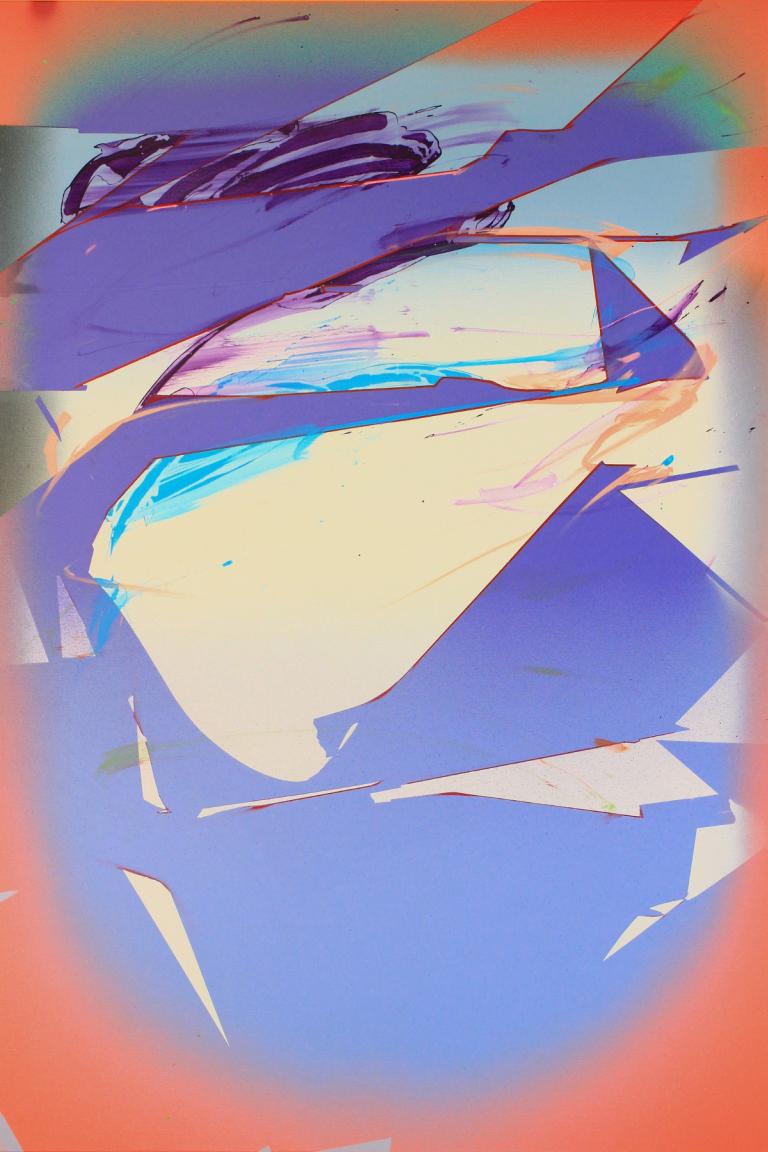
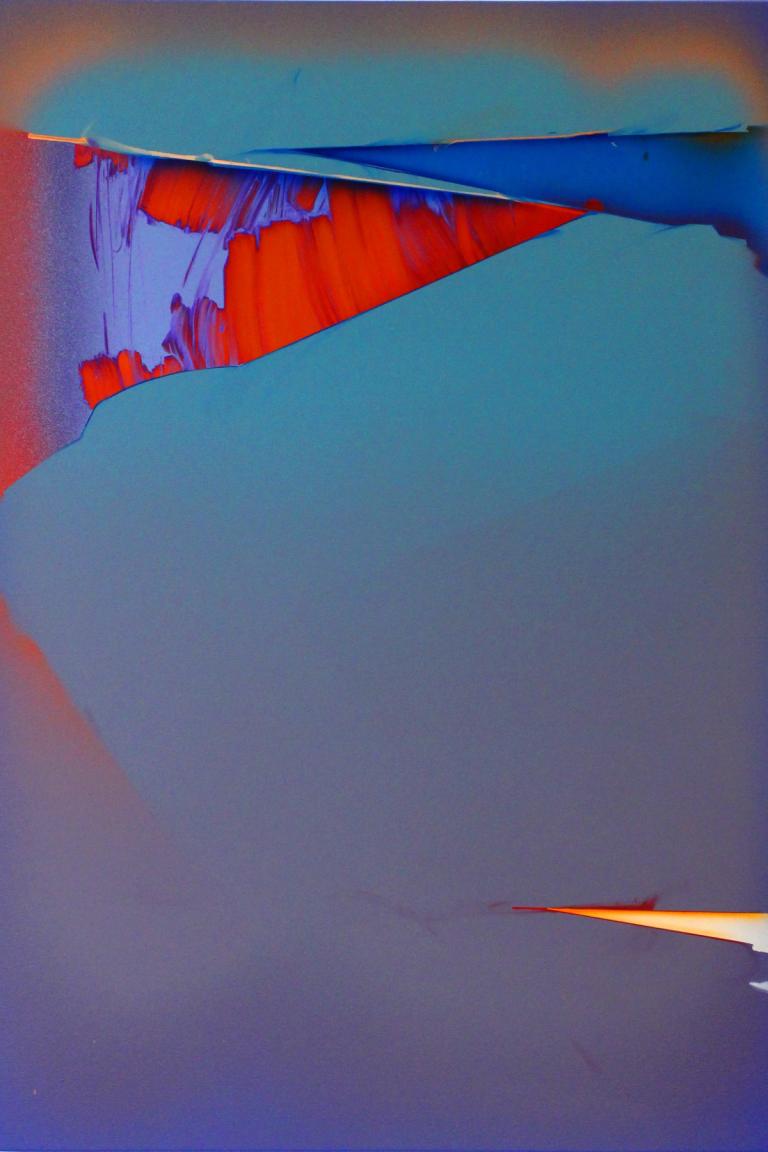
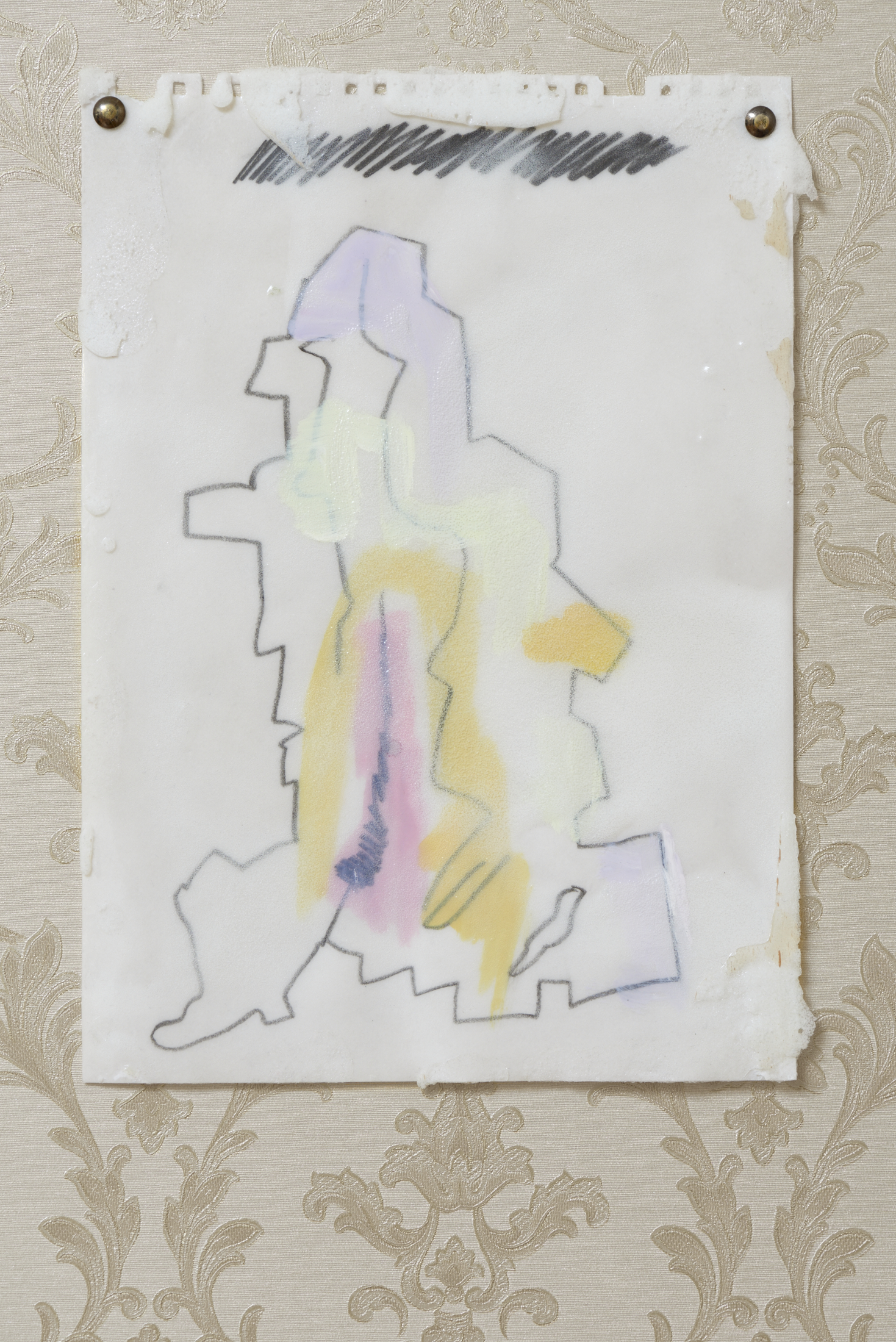
And I find quite a few young artists who are creating incredibly interesting large-scale works with the promise of creating big oeuvres in this twilight zone. Just to mention some recent personal highlights, I find absolutely thrilling the installations of Adrian Kiss and Zsófia Keresztes, the new paintings of Gergő Szinyova and Márton Nemes, and, last but not least, the drawing practice and the video art of Ádám Ulbert. I am sure that today, they are the backbone of the new generation of Hungarian visual artists. Right now, I am also focusing on their linguistically related artist colleagues from elsewhere in the region.
DF
I would add to the question of the media that the ’80s—both from the perspective of the art market and of the major art institutions—were dominated by a marked interest in painting. In the early ’90s, this triggered a natural counter-reaction in many young artists, who partly turned towards conceptual art.
This is not only a Hungarian phenomenon but also true for the international art scene. One of the most influential theoreticians and curators of the ’90s, Nicolas Bourriaud, for instance, sharply criticized certain figures of the new painting in his foundational works, Relational Aesthetics (1998) and Postproduction (2002). Similar tensions and debates also appeared in the Hungarian scene.
GR
Talking about painting, let’s move toward today. Right now, we can see in Hungary that some kind of abyss is opening up between painters and conceptual artists. Both parties have built up their own institutions, exhibiting spaces, curators, and heroes. This cannot be explained by old conditioning—even though in Hungary and the broadly meant East, figurative oil painting still represents “art” as such, whereas in the more successful countries of the region, such as Poland or Romania, there is no such contrast. Even at the Paint Brush Factory in Romania—the incubator of the Cluj School—brand-creating painters can still cooperate with their conceptual colleagues.

ÁF
I suspect this is the heritage of an institutional policy, which leads us back to personal conflicts that determined these overlapping fields of interests. I think for the artists who were socialized in the local art scene in the ’90s, this was a much more vivid and important experience, because it determined their careers. But the younger generations have moved beyond this problem—at least, I hope they have. Adrian Kiss, who studied at Saint Martins College in London, and Ádám Ulbert, who is a student of the Rijksakademie in Amsterdam, might not even have encountered this issue.
Retrospectively, if we compare Hungary to other former Eastern Bloc states, this phenomenon occurs among the ones that—at least in terms of providing artistic careers—profited the least from the international attention that was tangible after the political and social changes in 1989. This disappointment set in motion a “frustration spiral” along which artists and curators started to fight each other. And during these quarrels, they probably started to use the rhetorical division of “progressivity,” defined by the media-related line of who is painting and who isn’t, who uses a camera and who doesn’t.
DF
If we try to review the history of art from the ’60s on objectively, we might discover the fact that painterly and conceptual tendencies are not necessarily mutually exclusive phenomena. In the ’70s, several academically trained Hungarian painters created conceptual pieces and, as an organic continuation of this, paintings as well. When new paintings appeared, many of them turned (back) toward painting from their conceptual art practices; however, their later works are still related to their conceptual periods.
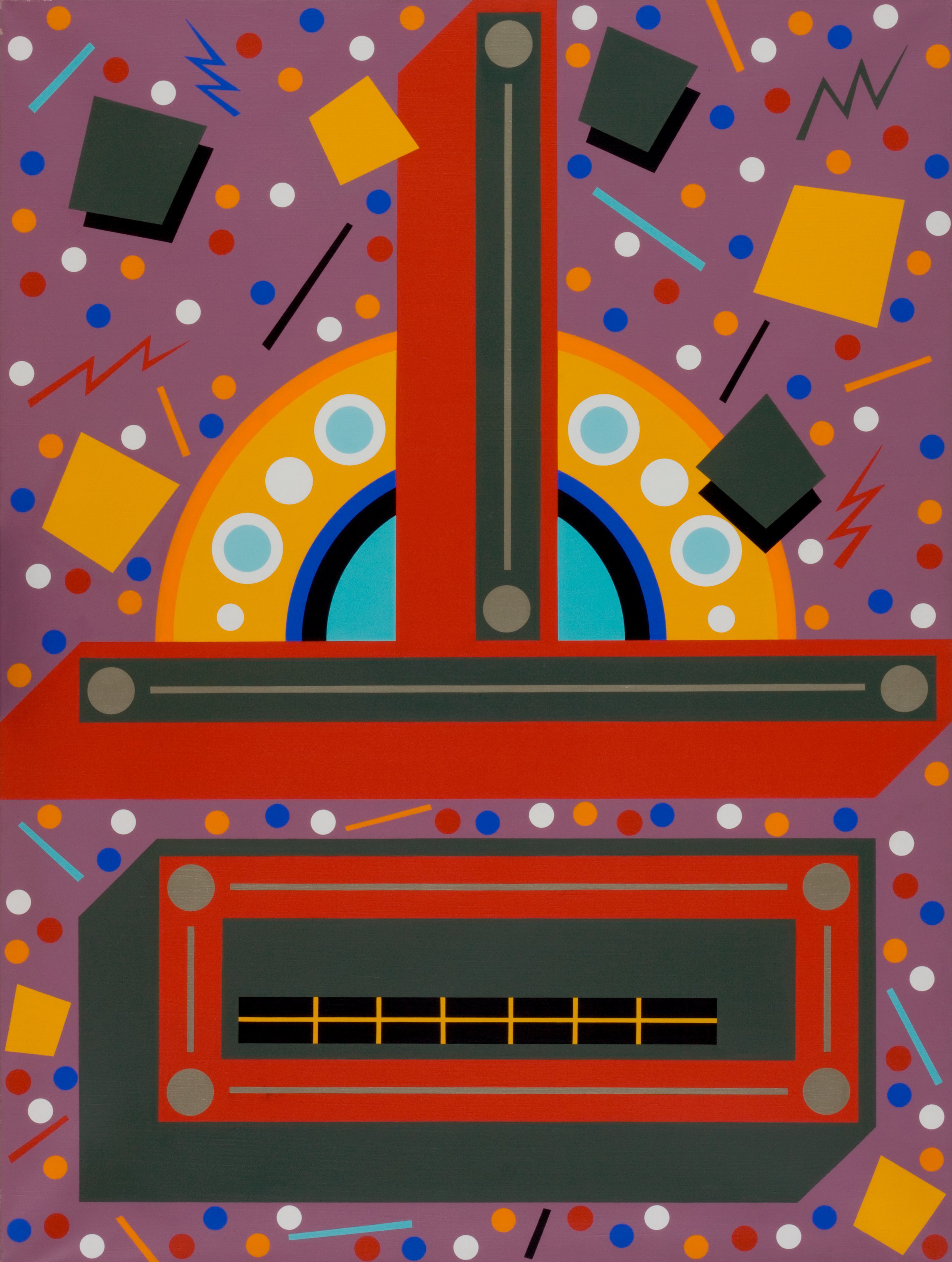
Miklós Erdély began to paint in the ’80s, Ákos Birkás turned toward an expressive painterly language after completing several conceptual series—and Imre Bak’s paintings connected to Neo-Geometric Conceptualism are organic continuations of his earlier conceptual works. In these oeuvres, new painting does not appear as opposed to conceptual practice, but rather can be grasped as a step further in a different medium.
GR
Although the democratic turn that arrived with the collapse of the Eastern Bloc reorganized the scene, in the past few years we have been witnessing a political re-entrenchment in Hungary. The present governmental structure—which could be described with terms like populism, nationalism, or illiberalism—has created a negative climate for the contemporary scene of fine arts, which has grown up and come into leaf following the change of the regime. A rough winter has set in with minus temperatures and cutting wind.
The big question is to what extent artistic practice has changed while politics in the past, let’s say five years, has initiated a “Little Ice Age'' in contemporary culture. What is happening in the studio while democracy is being demolished? Does the general bad mood affect creative processes? Can one be independent of all this?
ÁF
Artists are preoccupied with this change by all means: on the one hand, on the level of politics and cultural policy, and on the other, in their individual careers. From a non-profit institutional point of view, this is actually the end of a longer ice age. The Hungarian institutional structure—with far worse infrastructure compared to that of our neighbors, such as Romania or Serbia—used to be a much closer network, consisting of museums outside Budapest, and galleries that all presented valid career options for local artists. This has changed drastically now, and we can surely say that this network has collapsed; many institutions are now on their knees because of the lack of public funding for culture.

GR
OK, presentational options have been narrowed down, but what is happening in the studio? The neo-avant-garde, as a countercultural phenomenon, has separated itself from the oppression of power. Why isn’t this a workable strategy nowadays? As Duchamp prophetically put it: avant-garde art will go underground. That is, the renewing spirit of modern art only works if it does not sit in the comfortable armchair of money or state prizes, and thrives when it’s being beaten from the top.
DF
It still needs to be added that even during socialism, the situation was not black and white. There was a vast gray zone between real counterculture and real official culture.
ÁF
Even though the political climate is incredibly unfavorable now, it is an illusion to believe that it used to be better in the past. It is my experience that the artistic space, including ourselves, originates in the atomized art scene of the ’60s and ’70s. We have to understand that the audience for these activities and events was completely sporadic compared to recent visitor numbers of important museum exhibitions. We have to be honest that this artistic tradition, which we continue, never had a firm social base.
And today, public funding believes only in one indicator—visitor numbers—and it doesn’t care about artistic quality or opening up perspectives for the future. It cares only about maximizing interests for the here and now. The democratic transformation has worked this scene into a frenzy and it created the illusion that the visual arts scene has some sort of lobby power and a voice that actually matters. But under Viktor Orbán, it turned out that the visual arts in Hungary are among the most marginal fields of the arts.
GR
Here we have to mention the OFF-Biennale in Budapest, which was organized for the first time last year with huge success. It was founded by fine arts experts politically pushed out of their leading positions, together with the help of many volunteers. In a strange way, it was created completely without a leading curator, in a kind of democratic/anarchistic way. The example of OFF shows that an institution can function independently from big political systems. In your opinion, is this a new alternative to follow, or is it simply an isolated case study that cannot be replicated?
DF
Recently, OFF has perhaps been the only Hungarian contemporary art event that became internationally visible. OFF is a pilot project initiating a new structure. The participants themselves regard it as an experimental model, a test of the space outside the state-supported sphere.
The question is whether such a structure is sustainable without state funding in Hungary and whether it can find its social basis. Yet another critical issue is to what extent the counter-cultural narrative operating with notions like the “second public sphere,” inherited from the neo-avant-garde, can be applied to the present situation.
The dichotomous model opposing official and dissident positions is not even properly applicable to the ’60s and ’70s. However, apart from the open questions mentioned above, we can still claim without any doubt that OFF has been the most important curatorial event of the recent past in Hungary, and I hope that it will continue and that a way will be found to refine and improve its concept.
ÁF
I think the OFF-Biennale was brilliant because it realised that the state still does not cover all of the elements of the institutional field of contemporary art. The state has museums and the Kunsthalle at its disposal, where it can implement its conservative cultural policy. But Budapest and the state have no biennial yet. So actually, the activities that fell out of the state-funded system could find a new brand, body, or communication channel for themselves.
The goal of OFF was to define itself as an alternative institution, but the project, from my perspective, was less about artistic content. Retrospectively, I can recall that there were a lot of people who met each other and went to workshops, but besides the Islator (at the previous Postal Palace) or the Bookmarks (at the previous MEO), I cannot really remember any other defining bigger-scale exhibition that reached out toward the local arts scene. For me, the first OFF was much more about organization than content.
GR
OFF’s name and position—according to the narrative it creates itself—is the clear manifestation of the conceptual/non-conceptual dichotomy that we have just talked about; there is a “new modern art” today which is conceptual and capitalizing on a neo-avant-garde practice, while it wildly opposes the art exhibited at state locations and keeps fighting with it. This is almost a chemically pure scheme, but it comes with a special, piquant Hungarian feature: the most important partners of OFF Biennial were commercial galleries (acb Galéria, Inda Gallery, Kisterem, VILTIN Gallery, The Vintage Gallery, etc).
From the perspective of Anglo-Saxon global contemporary art, this is a situation that is difficult to grasp. In the West, dependence is created by money—that is, by a commercial environment—and the way out of this dependence is the establishment of non-profit/state institutions. In Hungary (and in many developing countries), the commercial galleries enjoy relative independence because they generate no major profit, which secures their independence, while it is the state that corrupts the artists through money and ideology.

DF
Since the fall of the Iron Curtain, a system resembling Western structures has started to evolve. The Hungarian institutional system recalls, on a smaller scale, the “Western” model—there are auction houses, galleries, Kunsthallen, and museums. We have all types of institutions, but the system only functions properly if its different (for-profit and nonprofit) actors can cooperate well and if they, so to speak, are able to control each other.
Here in Hungary, the very fragile institutional system seems to have been damaged (or at least distorted) in the recent past. There are fewer and fewer properly functioning non-profit institutions, and these venues cannot be substituted by small commercial galleries. At the same time, there is a more general problem—the scene is strongly isolated.
I think Budapest’s advantage is also its disadvantage. The city is big enough to enable one to exist in it, both in the market and non-profit senses; there are relatively many art events; and there is no pressure on artists and other art professionals to take steps “outside.”
The local art scene offers the illusion of being visible and present, even though I can think of few examples of people who have actually managed to step lastingly outside of this system into the international scene. Just like during the ’70s, today art professionals are considering migration as an alternative; however, recent trends of immigration are hardly comparable with the situation of that decade, when the Iron Curtain still existed. The political and social circumstances and the meaning of immigration have essentially changed in the last twenty-five years.
GR
Let’s look on the bright side! Every miserable situation is an opportunity—the Hungarian institutional network (which has been formed over the past thirty-five years) is now padded and comfortable with Western infrastructure, but is still completely isolated internationally, so it does not matter if it is crackling, breaking up, and emptying out. Now, there is an inspiration to open up and take a big breath.


